Ask which Manhattan interior designers are setting the tone below 14th Street and the answer has gotten specific. The downtown look of the mid 2020s is being built by a small group of firms that make things rather than merely arrange them: Ashe Leandro, Charlap Hyman & Herrero, Valle de Valle, Billy Cotton, Green River Project, Crosby Studios, and Husband Wife. Their rooms favor hand finished plaster and oiled wood over lacquer, commissioned furniture over showroom orders, and palettes that read as calm in person and slightly strange in photographs. Several of them now run galleries, release furniture collections, or publish monographs alongside client work.
This is a Design Scene profile: seven active firms, what their work actually looks like, and the named projects that prove it.
Key takeaways
- Downtown Manhattan interiors are converging on natural materials, commissioned furniture, and rooms organized like gallery installations.
- Ashe Leandro and Charlap Hyman & Herrero both hold spots on the 2026 AD100 and both work heavily in the Tribeca and Village loft stock.
- Studio Giancarlo Valle rebranded as Valle de Valle in late 2025 and keeps a gallery, Casa Valle, in Tribeca.
- Furniture-first studios like Green River Project treat interiors as a byproduct of making objects, and that approach is spreading.
- Manhattan interior designers typically charge $150 to $500 per hour, with flat fees from about $5,000 for one room to $175,000 and up for a full renovation.
Ashe Leandro
Ariel Ashe and Reinaldo Leandro have run their architecture and interiors office since 2008, and the 2026 AD100 list confirmed what downtown clients already knew. Their rooms are pale, ordered, and physical: troweled plaster, wide plank oak, sculptural seating spaced like exhibits. A 2,000 square foot Tribeca loft in a former factory building, designed as a pied-a-terre for a Los Angeles client and profiled by 1stDibs Introspective, is the clearest statement of the method. One open room handles living, cooking, and dining. Pattern is almost entirely absent. Low, curved furniture carries the space on its own. The client roster runs through the art and film worlds, including Rashid Johnson, Liev Schreiber, and Donald Glover. Their projects cluster below Canal Street, in exactly the loft stock covered in our Tribeca interior design guide.
Charlap Hyman & Herrero
Adam Charlap Hyman and Andre Herrero run the most theatrical practice of the group, with offices in New York and Los Angeles and a place on the 2026 AD100. The firm thinks in scenes. In their Museum Tower apartment renovation, bi-fold doors close the kitchen into a room of its own, then open to extend the living space. Charlap Hyman’s own apartment in a 1924 Turtle Bay building layers historically significant furniture against contemporary pieces. The studio completed a Greenwich Village loft renovation in 2025, and in early 2026 Dezeen covered Pocketbook, their conversion of a Hudson, New York factory into a hotel. Expect saturated color, trompe l’oeil moments, and furniture chosen for narrative rather than safety.
Valle de Valle
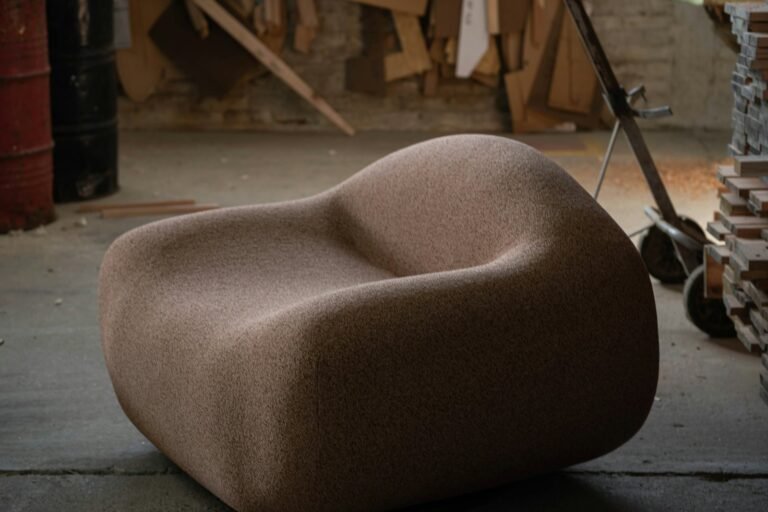
Giancarlo Valle and Jane Keltner de Valle renamed their practice Valle de Valle in late 2025, a change Cultured covered as the studio approached its tenth anniversary, with a Rizzoli book in the works. The downtown footprint is literal: in 2024 the couple opened Casa Valle, a Tribeca gallery where the studio’s carved wood furniture and plush, rounded seating sit in fully realized rooms. Current commissions include a wine bar in downtown Manhattan and Ulla Johnson’s Madison Avenue flagship. During NYCxDesign 2025 the studio exhibited reimagined furniture designs by Antoni Gaudi alongside its own work. The signature is heavy, hand shaped form, warm wood tones, and curves that feel drawn rather than computed.
Billy Cotton
Billy Cotton opened his interiors practice in 2011 and joined the AD100 in 2017; he also appears on the Elle Decor A-List, and Rizzoli published his monograph, Billy Cotton: Interior and Design Work. The studio sits in Brooklyn, but much of the work lands in Manhattan apartments for art-world clients. Cotton designs lighting and furniture in-house, which keeps his rooms from reading as shopped. The mix is historical and modern in the same breath: a spare modern envelope holding traditional millwork, or period furniture under fixtures of his own design. The result is sleek without being cold, anchored in tradition without costume. Among Manhattan interior designers working at the high end, he is the one other designers cite for restraint.
Green River Project LLC
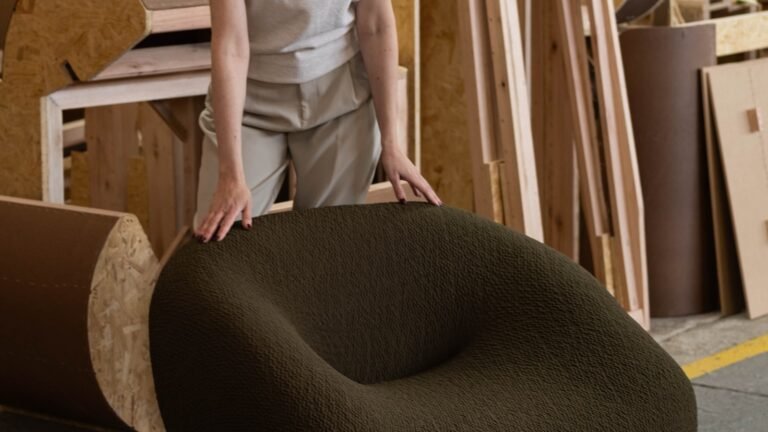
Aaron Aujla and Benjamin Bloomstein founded Green River Project in 2017 after roughly a decade working as artists in New York, and the studio still behaves more like an art practice than a decorating firm. Furniture comes first, released in numbered collections the way fashion houses release seasons. Their interiors include the Hester Street store for Bode, the label run by Emily Adams Bode Aujla, and Dr. Clark, a restaurant in Chinatown. The couple’s own New York apartment, designed by the studio, draws its palette from turn-of-the-century Eastern European interiors with references to Aujla’s Punjabi heritage. The work is hand built, visibly joined, and warm. PIN-UP profiled the pair on exactly this point: process over polish.
Crosby Studios
Harry Nuriev founded Crosby Studios in 2014 and named it for Crosby Street in SoHo, which tells you where the sensibility lives even as the practice ranges wider. Nuriev works in saturated single-color environments: a room committed entirely to one hue, executed across walls, furniture, and objects. The studio operates across interiors, furniture, fashion collaborations, and digital space, including a furniture collection released inside a video game, a project covered by Metropolis. Recent residential work includes a Williamsburg project at 276 Berry Street with Compass. Crosby Studios marks the conceptual outer edge of the downtown scene, and its ideas have a habit of showing up, diluted, in everyone else’s mood boards two years later.
Husband Wife
Husband Wife, the New York studio co-founded by Brittney Hart, describes its interiors as evoking “the casual elegance of Rohmerian cinema,” and the work backs the phrase. These are architecturally minded rooms where the big moves are built in rather than bought. In one apartment project covered by Livingetc, the studio resolved a tight footprint with a full storage wall that integrates a daybed, juxtaposing materials so the utility reads as composition. That is the firm in miniature: comfort layered into structure, nothing applied as an afterthought. The studio’s downtown work sits naturally beside the cast-iron lofts in our SoHo interior design guide, where built-in thinking matters more than square footage.
What these firms share, and where downtown taste is heading
Three threads connect the seven. First, furniture is commissioned or made in-house, not specified from a catalog; Green River Project and Billy Cotton build it, Valle de Valle sells it from a Tribeca storefront. Second, materials are matte and natural: plaster, oak, pine, stone, wool. Gloss is out. Third, the designers are becoming institutions in their own right, with galleries, monographs, collections, and hotels, which means the downtown residential look now travels into restaurants, shops, and hospitality almost immediately.
The direction of travel is toward rooms that are built rather than dressed. Color is structural, not accent. Storage is architecture. And the geography is loosening: the same hands shaping Tribeca lofts are now working in Chinatown restaurants and Hudson Valley hotels. For block-by-block context on where this work concentrates, our neighborhood guides map the territory.
Frequently asked questions
How much does a Manhattan interior designer cost?
Published 2025 and 2026 fee guides put Manhattan hourly rates at $150 to $500, with most NYC firms falling between $150 and $400 per hour. Flat fees run from about $5,000 for a single room to $175,000 or more for a full luxury renovation, and some firms charge 10 to 20 percent of construction cost instead. Initial consultations in the NYC metro area typically cost $200 to $750. Firms at the level profiled here generally sit at the top of those ranges and take projects by minimum budget.
How do you choose between Manhattan interior designers?
Match the portfolio to your building type before anything else. A firm fluent in cast-iron lofts will handle a Tribeca conversion differently than a prewar specialist handles a Village co-op. Then ask three practical questions: who runs the project day to day, what share of the furniture will be custom versus purchased, and how the fee structure handles construction overruns. References from past clients in similar buildings tell you more than any portfolio image.
Do top designers take on small apartments?
Yes, more often than the portfolios suggest. Ashe Leandro’s published Tribeca pied-a-terre is 2,000 square feet, and Husband Wife built its reputation partly on tight-footprint apartments where storage doubles as architecture. Small projects with decisive clients move fast and photograph well, which designers value. If a full engagement is out of reach, many firms and their alumni offer paid consultations, and the hourly market in New York starts around $150.
Sources
- 1stDibs Introspective: Ashe Leandro Transforms a Tribeca Loft
- Cultured: Jane Keltner de Valle and Giancarlo Valle Reintroduce Themselves
- Dezeen: Charlap Hyman & Herrero converts Hudson factory into hotel
- PIN-UP: Green River Project on their process-driven approach
- Rizzoli: Billy Cotton, Interior and Design Work
- Studio Leinik: How Much Does an Interior Designer Cost in NYC in 2026