New York homes in 2026 are warmer, browner, and more layered than they have been in a decade. Three shifts are real: chocolate brown has replaced gray as the city’s default neutral, color drenching has moved from stylist trick to standard practice, and vintage furniture is winning on economics as much as taste. The rest of this year’s trend cycle deserves a harder look. Some of it reflects what designers are actually specifying in Manhattan and Brooklyn apartments. Some of it is showroom copy wearing a trend report as a costume. This guide separates the two, names its sources, and notes how each trend behaves in a 700-square-foot apartment rather than a photogenic Hamptons spread. If you want the people executing these ideas, start with our guide to Manhattan interior designers.
Key takeaways
- Chocolate brown is the most cited 2026 color among working designers, named by 33 percent in the 1stDibs survey. Benjamin Moore made espresso official with Silhouette AF-655.
- Color drenching keeps growing: 35 percent of surveyed designers call it a top technique. It is also the cheapest trend on this list to execute, which explains some of its momentum.
- Maximalism (39 percent) and eclecticism (38 percent) lead client requests, but in practice this means layered, collected rooms, not clutter.
- Vintage and antiques are surging, and the 2025 tariffs are part of the reason: 92 percent of designers told 1stDibs that tariffs affected their business.
- Curved, oversized furniture dominates showrooms. Measure your stairwell before believing it belongs in a walk-up.
- All-white rooms, gray-on-gray palettes, and the 1970s nostalgia wave are fading.
Brown is the new default neutral
This one has receipts. In the 1stDibs ninth annual Interior Designer Trends Survey, which polled 468 design professionals in mid-2025, 33 percent named chocolate brown the top trending color for 2026. Burgundy tripled, jumping from 7 percent for 2025 to 21 percent for 2026. The paint companies landed in the same place independently: Benjamin Moore’s Color of the Year is Silhouette AF-655, a deep espresso with charcoal undertones, and Sherwin-Williams picked Universal Khaki, an earthy neutral between beige and taupe.
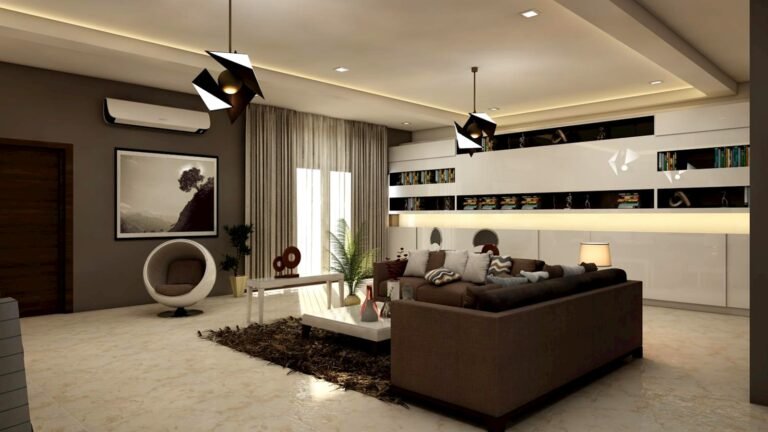
When designer surveys, paint manufacturers, and showroom floors all converge on the same palette, that is a real shift, not a press release. In New York terms, brown works hard. Prewar apartments with limited natural light have always fought white paint and lost. A deep brown or burgundy turns the dimness into intent. Pair it with cream trim and brass hardware and a north-facing junior four stops apologizing for itself.
Color drenching becomes standard practice
Color drenching, painting walls, trim, and ceiling in a single shade, was cited as a surging technique by 35 percent of designers in the same 1stDibs survey. The adjacent numbers are more telling: 30 percent flagged upholstered walls and 35 percent expect wallpapered ceilings to grow. The wall is no longer a backdrop. It is the project.
A skeptical note is warranted. Drenching spreads partly because it photographs well and costs almost nothing beyond extra paint, which makes it irresistible to content creators and paint brands alike. That does not make it wrong. In a small New York room it is genuinely useful: painting the ceiling and trim the same color blurs the corners and makes a 10-by-11 bedroom read larger and calmer. Drench the smallest room you have first, a bedroom, a hallway, a windowless bath, and judge from there.
The vintage surge is partly a tariff story
Designers report rising demand for pre-1920s antiques and collectibles from the 1920s through the 1950s, while interest in the 1970s, the decade that powered the last vintage wave, is declining. The aesthetic case showed up at NYCxDESIGN in May, where Homes and Gardens flagged a wave of what it called avant-garde antiques: Francesco Balzano’s Tessuto chair, with its jacquard landscape weave in dusty greens and faded pinks, and Sarah Sherman Samuel’s marble Pop Pop tables, which lean on ancient Greek forms.
There is also an economic case nobody puts in the lookbook. In the 1stDibs survey, 92 percent of designers said the tariffs introduced in 2025 affected their business. A vintage credenza bought at a Brooklyn estate sale carries no import duty and no eight-week lead time. The timing of the antiques revival is hard to read as a coincidence. For sourcing, the outer boroughs do the heavy lifting; our neighborhood guides cover where the estate sales and consignment floors actually are, and our design scene coverage tracks the auction calendar.
Furniture got rounder and much bigger
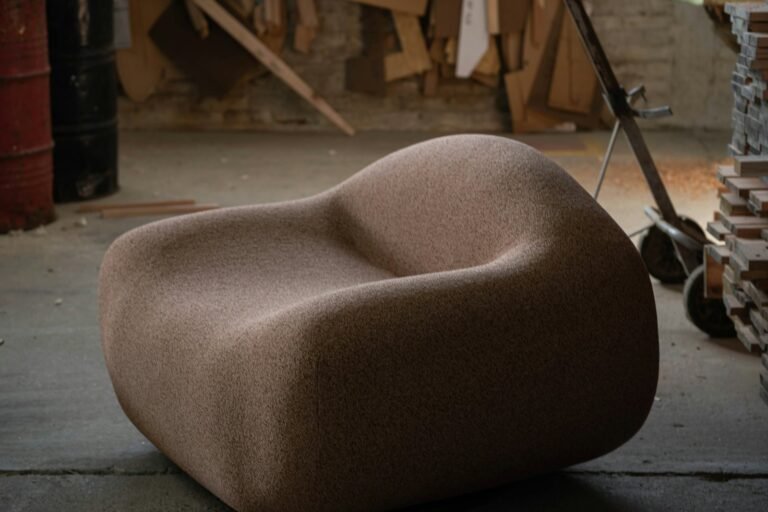
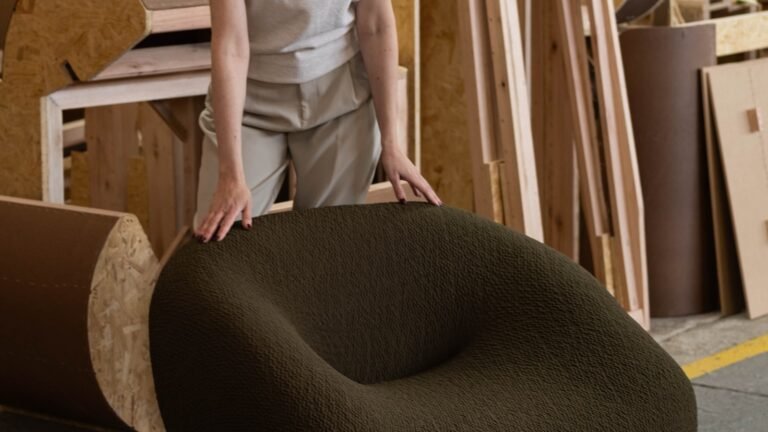
Curvy and irregular-shaped furniture was named a 2026 trend by 43 percent of designers in the 1stDibs survey, the single highest number in the report. Dwell’s trend forecast describes the same thing from the showroom side: sofas and lounge chairs swelling into deep, rounded shapes that claim real floor area, finished in heavily textured fabrics.
Here is where New York reality bites. A 100-inch curved sofa is designed for a great room in Austin, not a fourth-floor walk-up with a tight stair turn. The trend is real; the scale is negotiable. Look for curved silhouettes in apartment dimensions, a 72-inch rounded loveseat, a kidney-shaped coffee table, a barrel chair, and measure the stairwell, the elevator, and the apartment door before you fall in love. We keep a running list of pieces that survive the move in our small apartment ideas guide.
Ash starts crowding white oak
This one is early but worth watching. White oak has been the default wood of New York interiors for a decade, on floors, kitchens, and millwork. Sound Designs NY, a Hudson Valley fabrication studio that builds for city clients, reports a pivot toward ash in recent commissions, including a curved desk for a home office and furniture for a Brooklyn restaurant. Ash has a bolder, more variable grain than oak, takes stain readily, and looks sharp ebonized. One studio’s order book is not a movement, but fabricators tend to feel material shifts a year before retail does. If your contractor suggests ash for the built-ins, that is not a downgrade.
Ornament returns in the details
Dwell’s 2026 forecast calls out two small signals with large implications: eyelash boucle, a looped fabric with fine fuzzy yarns that adds visible depth, and the return of contrast welt, the piping that outlines a cushion’s edges and shows off tailoring. Add the hand-painted ceramics and loose brushwork surfaces that ran through NYCxDESIGN and a pattern emerges. After fifteen years of flat, seam-free surfaces, designers are putting the evidence of human hands back on display. For renters this is the most accessible trend of the year, since it lives in pillows, lampshades, and a single reupholstered chair rather than in the walls.
The marketing pile: responsive homes and shapeshifting furniture
Not everything in this year’s reports survives contact with skepticism. Coverage of NYCxDESIGN leaned on shapeshifting furniture and emotionally attuned lighting, framing a future where the home responds to your mood. The ASID 2026 trends report says AI is now fundamental to design practice, and that part is true, for renderings, presentations, and procurement. But a desk that changes shape is a trade-show object, and mood-responsive lighting is a dimmer with better PR. Dezeen’s own 2026 framing, interiors that choose curated calm over superficial opulence, is the more honest read: the technology is changing how designers work far more than it is changing how rooms feel.
What is fading
The all-white apartment is over. Nearly every 2026 forecast, from Dwell to the designer surveys, describes a move toward darker, warmer, more expressive rooms, which leaves the gallery-white rental aesthetic looking dated rather than safe. Gray-on-gray, the default palette of the 2010s flip, is going with it. The 1970s revival is losing steam in favor of earlier decades, per the 1stDibs data. And the farmhouse exports that never made sense in a city, shiplap, barn doors, open pipe shelving, are finally being retired. If your renovation plan still centers on white walls and gray floors, you are about to install 2019.
Frequently asked questions
What colors are trending for New York interiors in 2026?
Chocolate brown leads, cited by 33 percent of designers in the 1stDibs survey, followed by a burgundy rebound and growing interest in butter yellow, dark green, and sage. The paint companies agree on the direction: Benjamin Moore’s Silhouette AF-655 is a deep espresso, and Sherwin-Williams chose Universal Khaki, a warm earthy neutral.
Is minimalism actually dead?
No, but it lost its lease on the default setting. Maximalism (39 percent) and eclecticism (38 percent) top client requests for 2026, yet most working designers describe the middle ground: layered, collected rooms with restraint in the architecture and personality in the objects. Dezeen calls it curated calm. Empty is out; curated is not.
How do these trends work in a small apartment?
Three of them work better in small spaces than large ones. Color drenching makes compact rooms read bigger by erasing the contrast at the corners. Vintage pieces were often built for prewar room sizes, so they fit. Texture trends live in textiles you can carry home on the subway. The only trend that fights a small floor plan is oversized curved seating, so scale it down and measure twice.
Sources
- 1stDibs: The Guide to 2026 Designer Trends (ninth annual survey, 468 designers)
- Homes and Gardens: Trends from NYCxDESIGN 2026
- Dwell: The Home Design Trends That Will Rule 2026
- Benjamin Moore: Color of the Year 2026, Silhouette AF-655
- Dezeen: Interior design trends for 2026
- Sound Designs NY: 2026 Interior Design Trends NYC