SoHo interior design is loft design. The neighborhood that runs South of Houston sits inside the largest collection of cast-iron architecture in the world, and the homes carved out of those 19th-century buildings set the rules: long open floor plates, ceilings that climb 12 to 15 feet, columns you cannot move, and windows the size of doors. The job of a SoHo interior is to keep that raw industrial volume and still make it feel like a home you want to sleep in. Every decision, from how you place a rug to where you hide a bedroom, answers to the architecture first.
This guide covers what the buildings actually are, the interior style that has settled over them, the design and home stores worth walking into, and the practical moves that make a wide-open loft livable. For more on how New Yorkers handle small and unconventional footprints, see our city living coverage, and for the wider downtown design world, our design scene reporting.
Key takeaways
- SoHo’s homes sit inside the SoHo-Cast Iron Historic District, roughly 500 buildings designated by the NYC Landmarks Preservation Commission in 1973, with the largest cast-iron building stock anywhere.
- The typical SoHo home is a converted loft: open floor plate, 12-to-15-foot ceilings, oversized windows, exposed brick, and original cast-iron or timber columns.
- The prevailing style blends minimalist modern furniture with industrial bones and natural materials, warm rather than cold, contemporary rather than themed.
- Rugs, not walls, do most of the zoning. Oversized area rugs anchor separate living, dining, and work areas inside one room.
- High ceilings are the loft’s best asset. Tall bookcases, hung art, pendant lighting, and full-height drapery use the vertical space instead of wasting it.
- SoHo is also a design retail district. Roman and Williams Guild, CB2, Design Within Reach, Tom Dixon, and the MoMA Design Store all sit within a short walk.
The architecture: cast iron and the loft floor plate
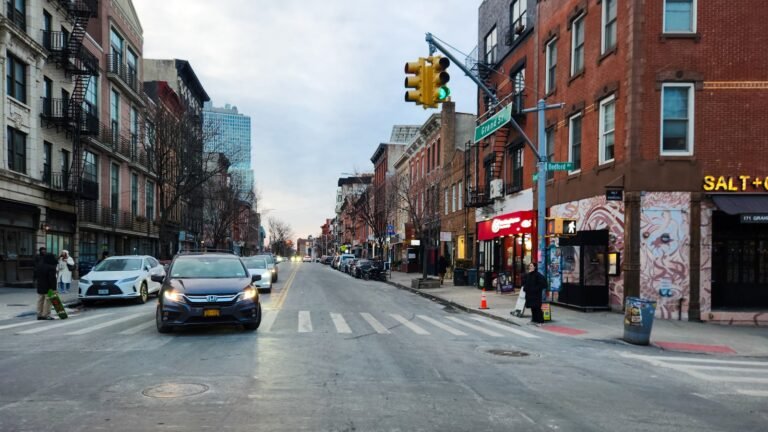
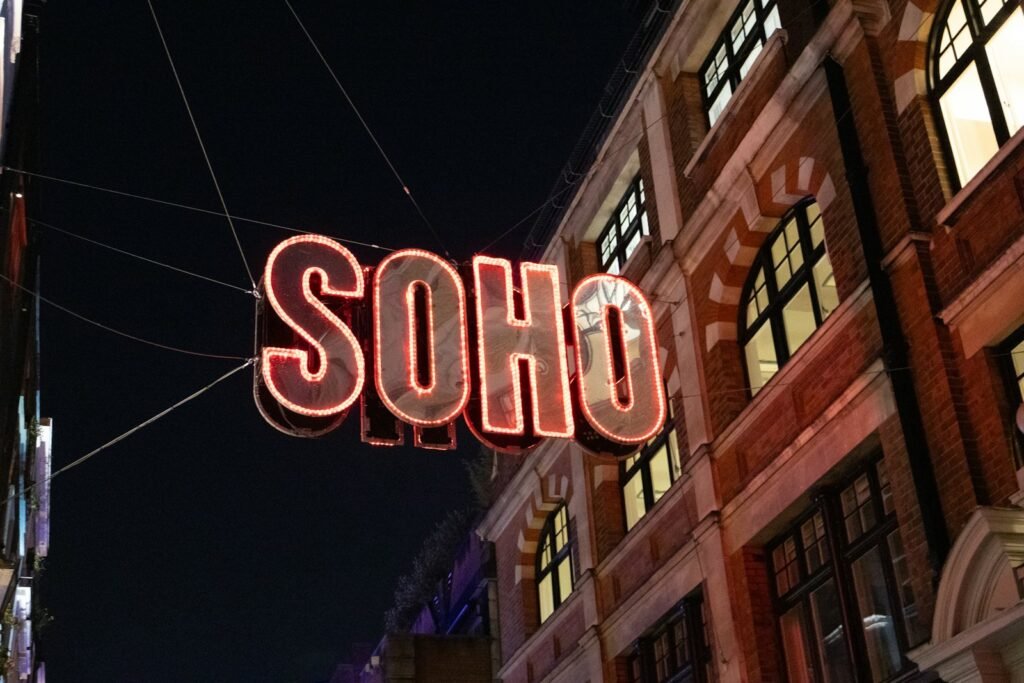
SoHo is bounded roughly by Houston Street, Canal Street, Broadway, and West Broadway, and its character comes from one material. In the second half of the 1800s, builders used prefabricated cast iron to throw up commercial and manufacturing buildings fast and cheap. Cast iron let them mimic stone facades, Corinthian columns, arched windows, and heavy cornices borrowed from Greek temples, French palaces, and Italian villas, all bolted together in a foundry instead of carved by hand. Around 250 cast-iron buildings still stand in New York City, and most of them are here.
The same iron-frame construction that held up a textile warehouse is what makes the interiors so distinctive. Because the structural load runs through iron columns and exterior walls, the floors are wide and largely free of partitions. Artists moved into these abandoned upper floors in the 1960s, drawn to exactly that: open floor plates, soaring ceilings, and big windows that flooded the studios with northern light. The live-work loft was born out of zoning that, at the time, did not even permit residences. The district was landmarked in 1973, with an extension approved in 2010, which is why so much of the original detail survives today.
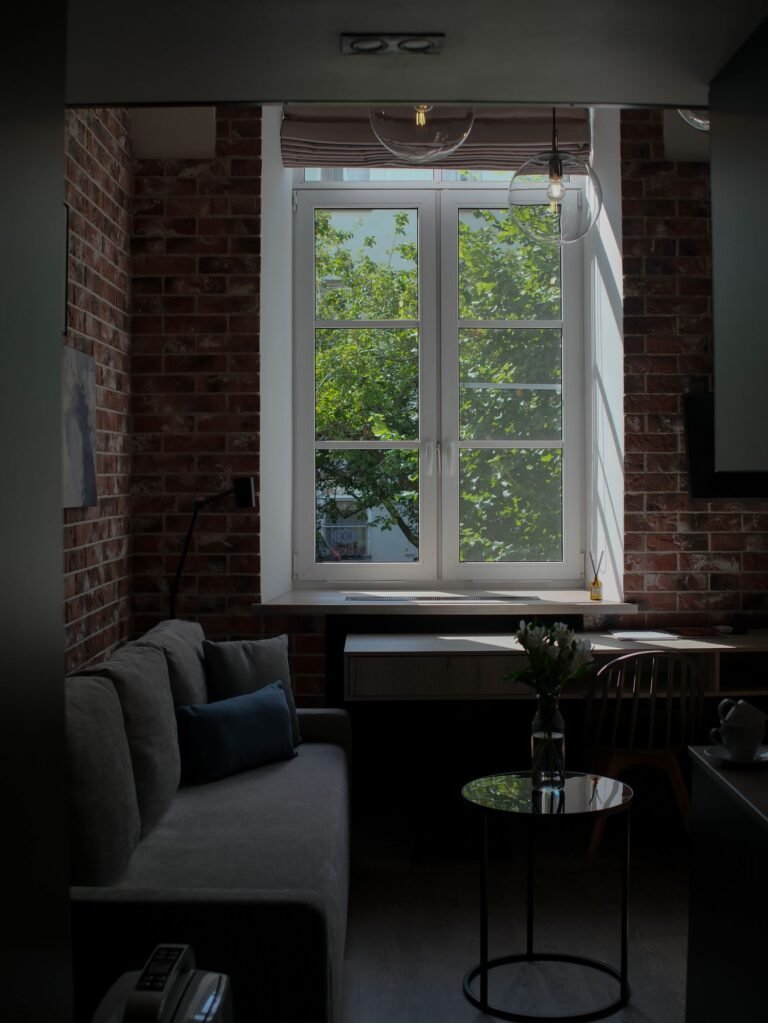
What you inherit when you buy or rent here is volume. A SoHo loft is typically one long room with ceilings between 12 and 15 feet, oversized windows on one or two ends, exposed brick on the party walls, and a row of columns marching down the middle. That is the gift and the problem at the same time.
The prevailing interior style
SoHo style is not a costume. It does not mean filling a loft with fake factory props. The look that has settled over these spaces blends minimalist, modern furniture with the building’s own industrial and natural elements, aiming for warm and contemporary rather than cold and clinical. The brick, the iron, and the timber are the texture; the furniture is restrained so the architecture stays the loudest thing in the room.
The defining move is openness. Most SoHo lofts keep partitions to a minimum, so the kitchen, dining, and living areas read as one continuous great room. That openness is the selling point and the reason the space photographs well, but it only works when each zone is clearly defined while sharing the same air. The skill is in editing. Designers working here tend to keep the furniture footprint lean, let the floor breathe, and use a handful of strong pieces rather than a crowd of small ones.
Warmth is the other half of the equation. Industrial origins can make a loft feel hard, so the antidote is tactile: plush throws, layered cushions, soft area rugs, and drapery that softens the lines of those big factory windows. Art carries real weight too. Large brick or plaster walls are made for oversized pieces, and hanging serious art is also a nod to the neighborhood’s history as an artists’ colony. If you are renovating rather than just decorating, our renovation guides get into the structural and landmark constraints in more detail.

Design and home stores worth knowing
One advantage of decorating a SoHo loft is that much of the supply chain is downstairs. The neighborhood is a retail district for design, so you can see pieces in person before they go into a room. A few worth the walk, all currently operating:
| Store | What it is | Where |
|---|---|---|
| Roman and Williams Guild | Design gallery, boutique, and library from the Roman and Williams studio, with the La Mercerie restaurant inside | 53 Howard Street |
| CB2 SoHo | Modern, edgier furniture and decor at an accessible price, one of the few stores south of Houston on Broadway | Broadway, SoHo |
| Design Within Reach | Modern design studio carrying Herman Miller, Knoll, and other authenticated classics | Greene Street, SoHo |
| Tom Dixon | Two-floor flagship: kitchenware and lighting below, living and bedroom furniture above | SoHo |
| MoMA Design Store | Museum-backed objects, lighting, and accessories for smaller statement buys | SoHo |
Treat these as a route, not a checklist. The point of shopping a loft in person is scale. A sofa that looks generous in a showroom can disappear under a 14-foot ceiling, and a pendant that reads as a statement online can look undersized once it is hung in real volume. For more on the downtown shopping and gallery circuit, see our neighborhoods coverage and our published home tours.
Practical decorating notes for loft spaces
The hard part of a SoHo loft is not finding nice things. It is making one enormous room behave like several rooms without building walls. A few principles do most of the work.
- Zone with rugs. An oversized rug under the living seating and a second under the dining table draws clear borders on the floor. The eye reads the rug edge as a room edge, even with no wall in sight.
- Use the height. Ceilings of 12 to 15 feet are the asset most people waste. Tall bookcases, wall-mounted cabinets, full-height drapery, and art hung high all pull the eye up and make the volume feel intentional.
- Light in layers, from the ceiling down. Pendants and suspended fixtures fill the vertical gap and define zones overhead the way rugs define them underfoot. Skip a single central fixture trying to cover the whole floor.
- Float the furniture. Pushing everything to the walls makes a loft feel like a waiting room. Pulling seating into the center, backs to the open space, creates conversation areas and lets the floor plate read as deliberate.
- Soften the hard surfaces. Brick, concrete, and iron need a counterweight. Throws, upholstered pieces, natural-fiber rugs, and drapery keep the space from feeling like the warehouse it used to be.
- Respect the columns. Original cast-iron or timber columns are not obstacles to hide. Let them mark the transition between zones and leave them exposed.

Related reading
- Long Island City Interior Design: Making New Construction Feel Like Home
- Greenwich Village Interior Design: The Row, the Gold Coast, and the Collected Look
- Chelsea NYC Interior Design: A Guide to Lofts, Galleries, and the Art-Forward Style
Frequently asked questions
What defines SoHo interior design style?
SoHo style is loft style: open floor plans, high ceilings, big windows, exposed brick and iron, paired with minimalist modern furniture and natural materials. The aim is a warm, contemporary space where the cast-iron building stays the star and the furnishings stay restrained.
Why are SoHo lofts so open?
Because the buildings were industrial. Cast-iron construction carries the load through iron columns and exterior walls, so the floor plates were left wide and free of partitions for manufacturing use. When artists converted them to homes in the 1960s, they kept that open plan, and it became the signature of the neighborhood.
How do you divide a loft without building walls?
Zone with rugs, lighting, and furniture placement instead of partitions. Oversized rugs mark out separate living, dining, and work areas; pendant lighting defines zones overhead; and floating furniture into the center of the room creates distinct seating areas while keeping sightlines open.
Is SoHo a historic district?
Yes. SoHo’s homes sit inside the SoHo-Cast Iron Historic District, roughly 500 buildings designated by the NYC Landmarks Preservation Commission in 1973, with the largest cast-iron building stock anywhere.
Sources
- New York Preservation Archive Project: SoHo-Cast Iron Historic District
- Wikipedia: SoHo, Manhattan
- Untapped New York: The Distinctive Cast Iron Architecture of NYC’s SoHo
- Intrabuild: SoHo Loft Design tips and examples
- Decorilla: NYC Loft Interior Design
- Roman and Williams Guild, 53 Howard Street (hours and listing)