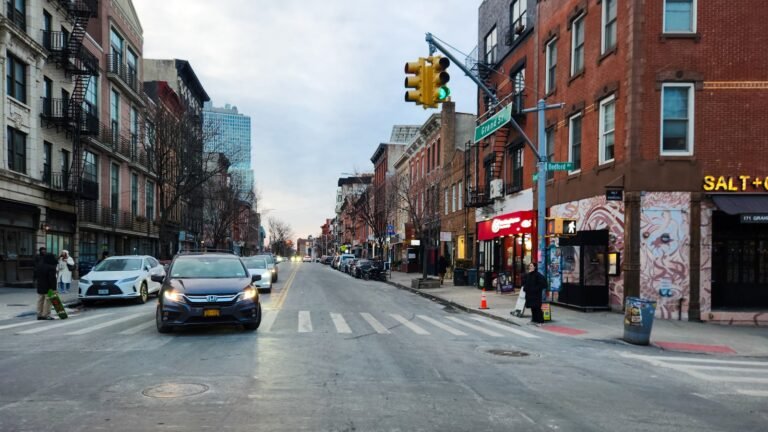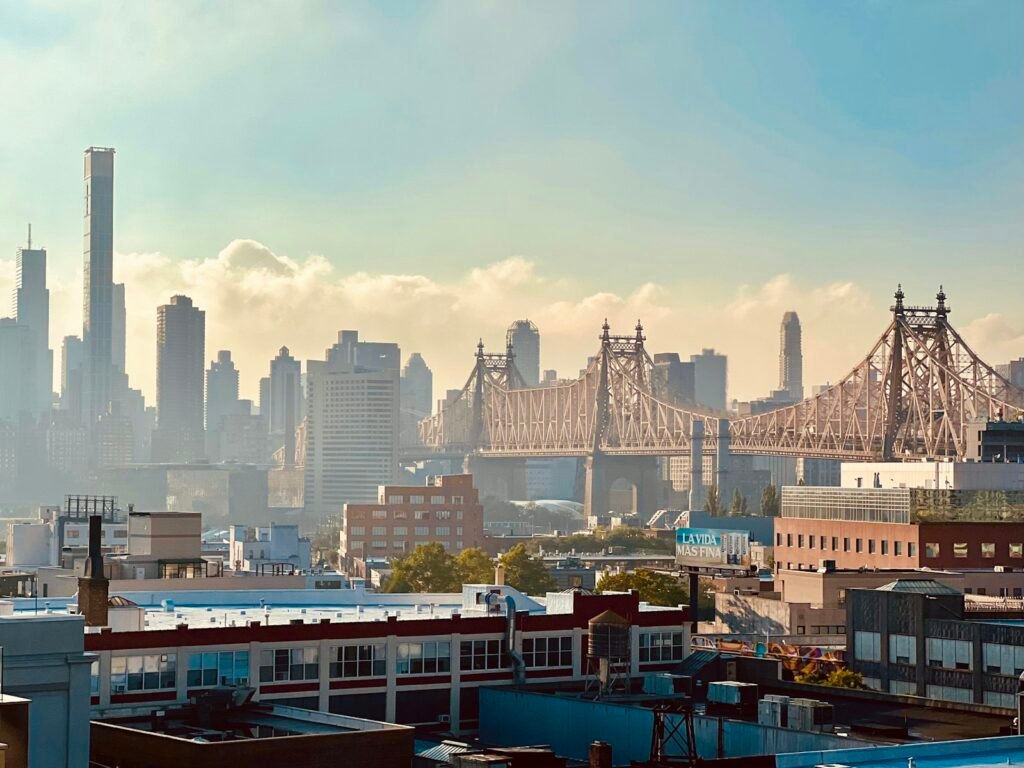
Long Island City built more apartments between 2010 and 2016 than any other neighborhood in the United States. RENTCafe counted 12,533 new rental units across 41 buildings, and the pace never slowed. In November 2025 the City Council approved the OneLIC rezoning by a 45 to 0 vote, clearing 54 blocks for about 14,700 additional homes. By the numbers, this is the country’s largest experiment in brand-new urban housing.
Almost none of it comes with character included. The towers along the Hunters Point waterfront and around Court Square hand every tenant the same starting point: white walls, pale engineered floors, a wall of glass, and a concrete ceiling you cannot drill into. Decorating in Long Island City is the reverse of a prewar renovation. You are not uncovering history. You are adding weight, texture, and shadow to a room that has none yet. Get that right and the glass box becomes a clean modern envelope with a warm interior life. Phone it in and your living room reads like the staging photos for the identical unit two floors down.
Key takeaways
- LIC is the most-built neighborhood in America, and the OneLIC rezoning approved in November 2025 adds capacity for about 14,700 more homes.
- The housing stock splits two ways: glass towers that need warmth added, and a small set of industrial conversions, like Arris Lofts, that need restraint.
- The white-box formula: lighting at three heights, one oversized textural rug, drapery run wall to wall, and at least one object older than the building in every room.
- Sound is the hidden defect of new construction. Concrete and glass echo; rugs, books, and fabric are acoustic treatment disguised as decor.
- Solar shades handle glare at height, drapery handles warmth, and most apartments need both. Condo boards usually regulate what faces the street.
- MoMA PS1 dropped admission fees in January 2026. It is the neighborhood’s free design education.
Towers or conversions: know which building you are in
New construction dominates. The Orchard, a 70-story rental on the Court Square side, holds 824 apartments and more than 100,000 square feet of amenities. Hunters Point stacks glass along the East River north from Gantry Plaza State Park; Court Square clusters around the Jackson Avenue spine and the 7, E, M, and G trains. Inside, the units repeat: nine-foot ceilings, full-height or oversized windows, heat and cooling units below the glass, and finishes chosen to offend no one.
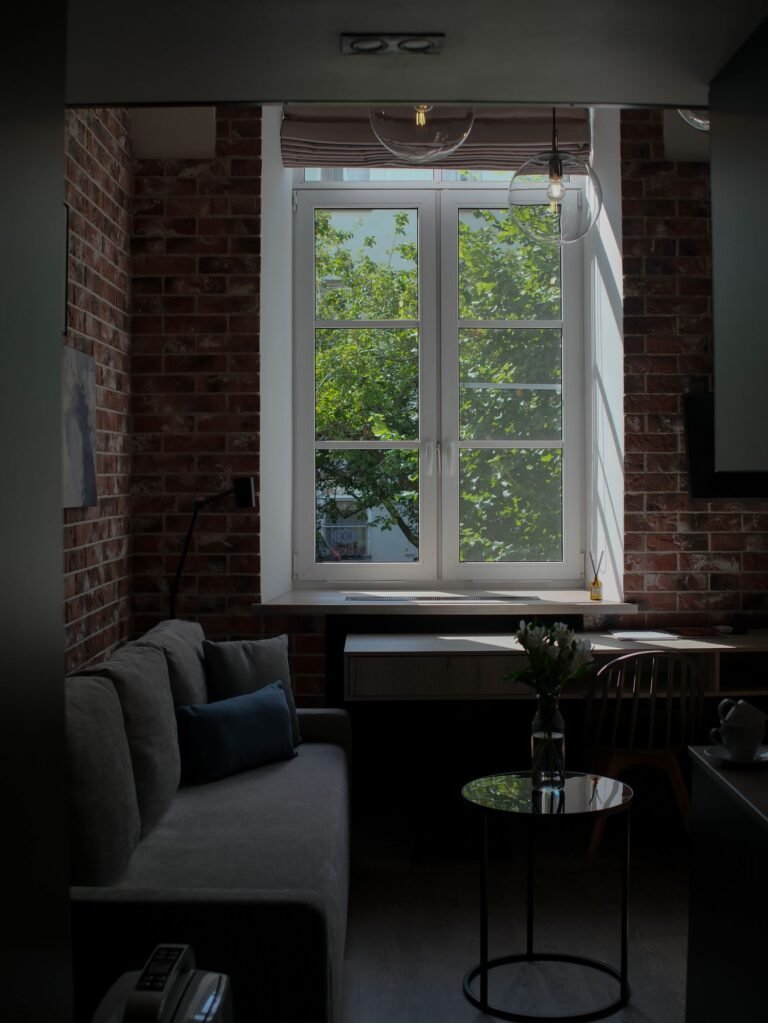
The second track is older and rarer. LIC spent a century as a factory district, and a handful of those buildings became homes. Arris Lofts on Thomson Avenue, the former Eagle Electric factory, was converted in 2008 into 123 condominiums with ceilings up to 14 feet, oversized industrial windows, and exposed structure. Conversions like it trade the river panorama for volume, mass, and walls that can hold a drill.
| New glass tower | Industrial conversion | |
|---|---|---|
| Ceilings | About 9 feet, flat concrete | 12 to 14 feet, structure visible |
| Light | Full-height glass, hard glare up high | Big steel-framed windows, deeper rooms |
| Surfaces | Drywall and engineered oak | Brick, plaster, original concrete |
| Design problem | No texture, no history | Strong character that resists competition |
| First move | Add age and material depth | Edit hard and let the shell speak |
If you are still deciding where to land, our neighborhood guides compare the design trade-offs across the city.
Making a white box feel like a home
Start with what new construction lacks: material depth. A new tower interior is gypsum, glass, and factory-finished oak, every surface smooth and recent. Counter it with things that show their age and their making. One large wool or jute rug, sized so the front legs of the furniture sit on it. Linen drapery run wall to wall rather than window to window. A plaster lamp, a waxed wood table, a flea-market find with dents. One object older than the building, per room, is a reliable minimum dose.
Lighting is the cheapest transformation, because most LIC living rooms have no ceiling fixture at all, just a switched outlet. Skip the single bright source. Place light at three heights: a floor lamp behind the seating, table lamps at mid level, and something small and low on a shelf or sill. Warm bulbs around 2700K, dimmers on everything. Brick Underground’s designers give glass apartments the same prescription: dispersed light beats overhead light.
Sound is the problem nobody photographs. Concrete slab above, glass on one side, drywall everywhere else: a new LIC one-bedroom echoes until you treat it. The big rug helps, with a felt pad underneath. Full drapery helps more. Bookcases filled with actual books break up flat walls, and an upholstered headboard quiets a bedroom. None of this is acoustic foam; it is furniture doing double duty.
Scale is the last trap. The glass wall deletes one of your four furniture walls, so float the sofa instead of pushing it against glass, keep seat backs low near the window line, and let the rug define the living zone in an open plan. Studios and compact one-bedrooms in the newer towers can borrow every trick in our small apartment ideas guide. The geometry is the same, just brighter.

If you landed a conversion, edit instead
The loft conversions need the opposite discipline. A 14-foot ceiling and a brick wall are already the statement, and stacking faux-industrial decor on top, the pipe shelving and the Edison-bulb clusters, turns a real factory into a theme restaurant. Keep furniture low and simple, hang art at a scale the wall can carry, and spend the budget on light. Tall ceilings swallow ordinary lamps; an arc floor lamp or plug-in pendants put light where the volume is. Let the shell talk and the furnishings answer quietly.
Local resources and the art anchor
LIC Furniture Warehouse at 42-33 24th Street stocks more than 65 brands, Herman Miller, Knoll, Vitra, and USM among them, in both new and pre-owned condition. The pre-owned route matters here: it is the realistic way to put a heavyweight piece, a real Eames chair or a USM credenza, into a tower apartment without a Manhattan budget. For the wider shopping map, our guide to NYC furniture stores covers the showrooms and vintage dealers one train stop away.
The neighborhood’s design education is free now. MoMA PS1, at 22-25 Jackson Avenue, dropped admission for all visitors on January 1, 2026, a three-year program that makes it the largest free museum in New York. The museum turns 50 this year, and Greater New York, its signature survey of more than 50 emerging artists, opened in April. Treat it as a reference library. The installations model color courage and material honesty better than any showroom does.

Practical notes: glare, height, and house rules
Glare at height is not a detail. On a west-facing 30th floor it decides where you can sit at 5 p.m. The standard answer is a dual treatment: a solar shade with 3 to 5 percent openness that cuts glare while keeping the view, plus a drapery layer for softness and evening privacy. Bedrooms get blackout rollers behind the same drapery. Motorization is worth the money on any window wider than your arm span.
Then read the rules before you buy. Condo boards and tower landlords in LIC commonly require street-facing treatments to show a uniform backing color, usually white or off-white, ban adhesive window film without approval, and prohibit drilling into window mullions or the concrete ceiling. Many condo bylaws also carry the classic New York carpet rule, coverage of most of the floor area. Ask for the alteration agreement before ordering motorized shades, not after.
Frequently asked questions
Is Long Island City a good neighborhood for design-minded renters?
Yes, with a caveat. You get new systems, real light, and a blank canvas at prices below comparable Manhattan glass. The caveat is sameness. Your finishes are everyone’s finishes, so the apartments that feel personal are the ones where the tenant supplied the personality.
How do I cut glare in a floor-to-ceiling glass apartment without losing the view?
Use a solar shade in the 3 to 5 percent openness range as the working layer and judge samples at the worst hour, late afternoon on a west exposure. Add lined drapery for evenings and acoustics, and confirm the building’s backing-color rule before you order.
How is decorating in LIC different from decorating in Williamsburg?
Williamsburg mixes older walkups, true loft conversions, and newer mid-rises, so the work there is usually a negotiation with existing character. LIC’s towers are younger, taller, and emptier of history, which means more freedom and more responsibility. Our Williamsburg interior design guide covers the Brooklyn side of that trade.
How do you make a new-construction apartment feel like home?
Use the white-box formula: lighting at three heights, one oversized textural rug, drapery run wall to wall, and at least one object older than the building in every room. Rugs, books, and fabric also work as acoustic treatment, since concrete and glass echo.
Sources
- 6sqft: More apartments built in Long Island City than any other U.S. neighborhood since 2010
- NYC Council: OneLIC Neighborhood Plan approved, nearly 15,000 new homes
- QNS: City Council approves OneLIC Neighborhood Plan
- MoMA PS1: Visit, free admission from January 1, 2026
- Arris Lofts: the converted Eagle Electric factory, 27-28 Thomson Avenue
- Brick Underground: How to decorate a NYC apartment with floor-to-ceiling windows