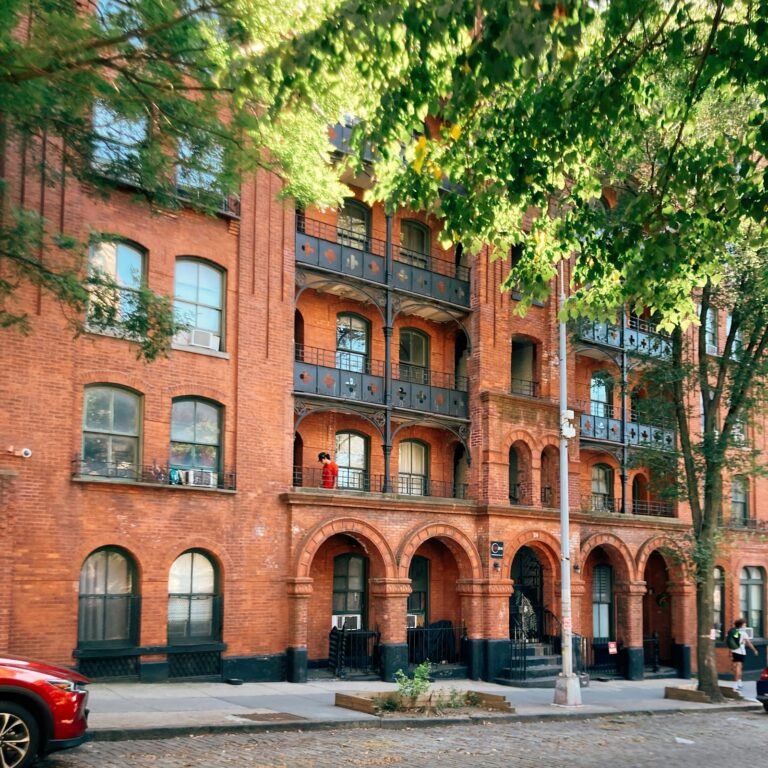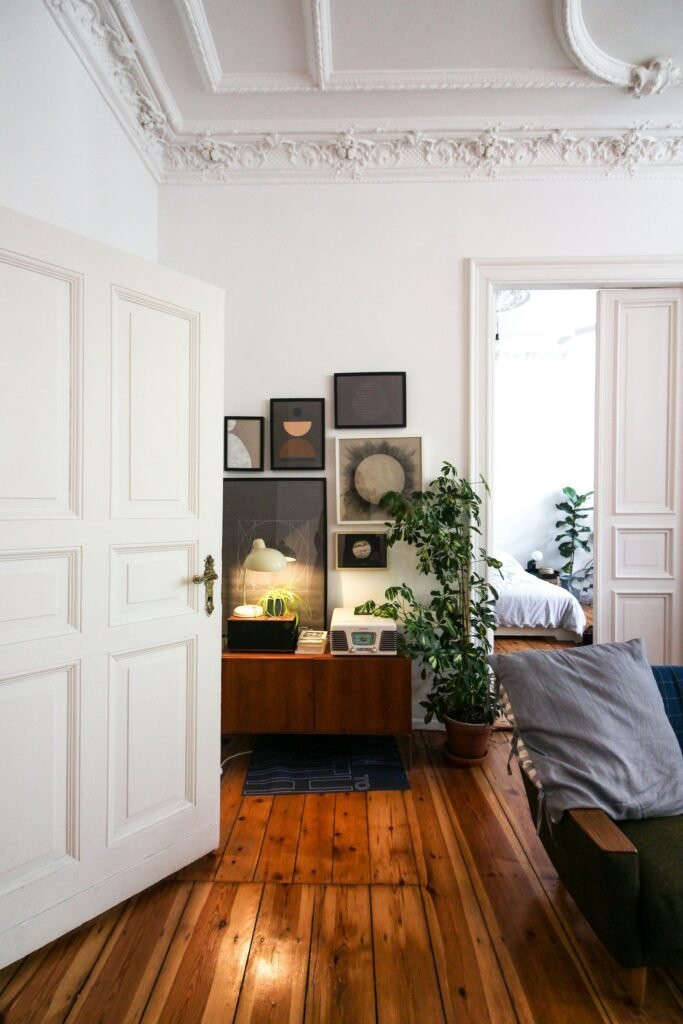
Upper East Side interior design is, at its core, prewar interior design. The neighborhood holds the densest concentration of grand 1900-to-1939 apartment houses in Manhattan, and the homes inside them set the tone: high ceilings, plaster moldings, herringbone floors, real fireplaces, and floor plans built around a formal entry foyer. The job of an Upper East Side interior is to honor that classical architecture while making a near-century-old apartment work for the way people actually live now. Style here leans traditional and refined, but the best rooms in the neighborhood are the ones that loosen the formality just enough to feel lived in.
This guide covers the architecture and the prewar co-op stock, the classic style that has settled over these apartments, the trade resources and showrooms worth knowing, and the practical rules of decorating an apartment that answers to a co-op board. For more on how New Yorkers live inside older buildings, see our city living coverage, and for the wider design world uptown, our design scene reporting.
Key takeaways
- The Upper East Side holds Manhattan’s largest stock of prewar apartment buildings, built roughly 1900 to 1939, many of them now co-ops with strict alteration rules.
- Architect Rosario Candela defined the type in the late 1920s and 1930s with grand foyers, curved staircases, and dramatic public rooms along Park and Fifth Avenues.
- The “classic six” floor plan, a living room, dining room, kitchen, two bedrooms, and a maid’s room around a central foyer, is the signature layout of the neighborhood.
- The prevailing style is classic and traditional: plaster moldings, herringbone or parquet floors, marble mantels, and layered, refined rooms rather than minimal ones.
- The Decoration & Design Building at 979 Third Avenue, open to the trade, is the design district anchor, with more than 120 showrooms across 17 floors.
- Prewar renovations run roughly $600 or more per square foot and require a signed alteration agreement and co-op board approval before work begins.
The architecture: prewar co-ops and the classic six
The Upper East Side runs from roughly 59th Street to 96th Street, between Central Park and the East River, and its residential character was set in the first decades of the 20th century. After Central Park was completed and Fifth Avenue pushed north, farmland gave way to limestone-and-brick apartment houses in neo-Georgian, Beaux-Arts, and Italian Renaissance Revival dress. Carnegie Hill, the stretch from 86th to 98th Streets near Fifth Avenue, is the clearest showcase of that early refinement, and much of it sits inside the Carnegie Hill Historic District, designated by the Landmarks Preservation Commission in 1974 and expanded in 1993.
No single figure shaped the neighborhood’s interiors more than Rosario Candela. In the 1920s and 1930s he designed a group of apartment houses on Park Avenue, Fifth Avenue, and Sutton Place that remain among the most prestigious addresses in the city. His exteriors were understated, but his interiors were the draw: grand entry foyers, curved freestanding staircases in duplex units, perfectly spaced windows, and thick inner walls that hid the plumbing and beams. A Candela floor plan orients you from the foyer to the main rooms, the library, the living room, the dining room, with a separate corridor running back to the bedrooms.
The everyday version of that grandeur is the “classic six.” The term describes a specific configuration that became standard in Upper East Side construction: a living room, a dining room, a kitchen, two bedrooms, and a small maid’s room, arranged around a central foyer with a separate service entrance. Classic fives, sixes, and sevens are hard to find and move quickly when they list, because the bones, generous room dimensions, high ceilings, and solid construction, are exactly what buyers want to renovate around. Our renovation guides get into what those bones allow and what they cost.
The prevailing interior style: classic, traditional, refined
Upper East Side style is traditional, and it is unapologetic about it. The architecture rewards it. Plaster crown moldings, herringbone parquet, decorative cornices, and marble mantels are not staged props here; they are original features that good design restores and works with rather than strips out. Where a downtown loft asks you to leave the structure raw, a prewar co-op asks you to dress it.
That means layering. The refined Upper East Side room tends to combine antique or vintage pieces with new upholstery, real curtains rather than bare windows, art hung in proper frames, and a palette that reads calm and considered rather than loud. In one Candela building from 1931, designers added extensive moldings, paneling, built-ins, and antique and reproduction mantels to deepen the historic character the apartment already had. The instinct is additive, not subtractive.
The most interesting work in the neighborhood right now is the work that loosens the formality. Designers are reimagining oversized formal dining rooms as family rooms, pulling dining tables into living rooms for a more casual life, and pairing comfortable mid-century pieces with classical detailing so the rooms feel layered and livable instead of staged. The architecture stays formal; the way people use it gets relaxed. For finished examples of that balance, see our home tours.
Design resources and showrooms worth knowing
The Upper East Side is also the center of New York’s design trade, which is convenient when you are furnishing a prewar apartment. The anchor is the Decoration & Design Building, the D&D Building, at 979 Third Avenue at 58th Street. The white-brick tower opened in 1966 and now holds more than 120 showrooms across 17 floors, carrying 750-plus product lines of fabric, furniture, lighting, and finishes.
| Resource | What it is | Where |
|---|---|---|
| Decoration & Design Building | The trade design district anchor, 120-plus showrooms across 17 floors | 979 Third Avenue at 58th Street |
| D&D showroom floors | Fabric, furniture, lighting, and finishes from international lines, trade-only | Inside the D&D Building |
| D&D consulting & buying program | Lets buyers not yet working with a designer purchase at trade prices plus a fee | Inside the D&D Building |
| Cooper Hewitt, Smithsonian Design Museum | National design museum in the former Carnegie Mansion, for reference and ideas | 2 East 91st Street at Fifth Avenue |
A practical note on access: the D&D Building’s showrooms are open to design trade professionals, and admission policies vary showroom by showroom. If you are not working with a designer, the building’s insider consulting and buying program is the sanctioned route to trade pricing, charged at the trade price plus an administrative fee. Since the pandemic, the building has brought back live programming, including its seasonal market events with panels and showroom openings. For the wider uptown shopping and gallery circuit, see our neighborhoods coverage.
Practical decorating notes for prewar apartments
The hard part of an Upper East Side apartment is not taste. It is the building. A prewar co-op comes with original materials that behave differently from new construction, and with a board that has a say in what you change. A few principles do most of the work.
- Clear the board first. Most co-ops require a signed alteration agreement before any permitted work begins. It sets the approved scope, contractor insurance, construction hours, and the board’s right to inspect. Design and approvals commonly run three to six months before a hammer swings.
- Budget for the bones. Prewar renovations run roughly $600 or more per square foot. Plaster walls, original framing, aging mechanicals, and period-accurate restoration all add to the number, and stripped walls can reveal sagging joists or uneven subfloors.
- Restore, do not replace. Original crown moldings, herringbone floors, decorative plaster, and marble mantels can usually be refinished. When a piece is too far gone, period-accurate materials keep the room honest.
- Respect the plaster. Plaster walls soundproof beautifully but resist new wiring and plumbing and crack over time. Plan electrical and mechanical runs around them rather than fighting them.
- Use the ceiling height. Tall ceilings are the prewar gift. Full-height drapery, large-scale art, and tall casework all read as intentional and keep the rooms from feeling squat.
- Dress the formal rooms for real life. An oversized dining room can become a family room; a formal living room can absorb the dining table. The classical shell holds up to a more casual program underneath it.
Frequently asked questions
What defines Upper East Side interior design style?
It is classic and traditional, shaped by prewar architecture. The signature rooms keep original plaster moldings, herringbone or parquet floors, and marble mantels, then layer in antiques, new upholstery, real curtains, and framed art. The aim is a refined, livable space that works with the building’s bones rather than against them.
What is a classic six apartment?
A classic six is a prewar layout with six rooms: a living room, a dining room, a kitchen, two bedrooms, and a small maid’s room, arranged around a central foyer with a separate service entrance. It is the defining floor plan of Upper East Side and Upper West Side co-ops and is prized for its generous proportions.
Do I need board approval to renovate a prewar co-op?
Almost always. Most co-ops require shareholders to sign an alteration agreement before any permitted work starts. It specifies the approved scope, contractor insurance, allowed construction hours, and the board’s right to inspect. Prewar buildings tend to have stricter review, and the design-and-approval phase alone often takes three to six months.