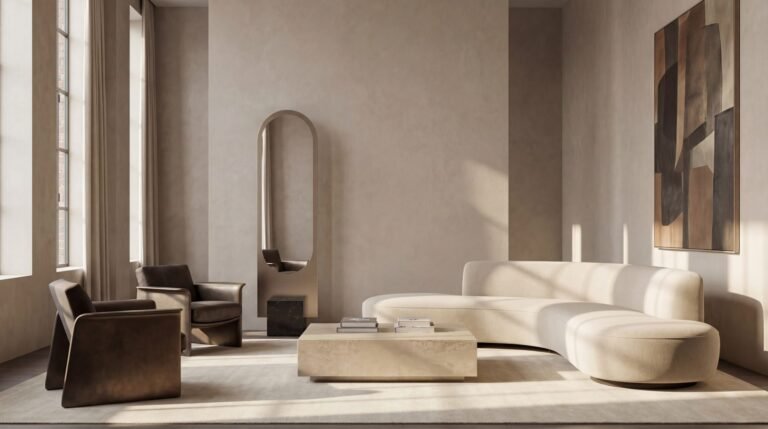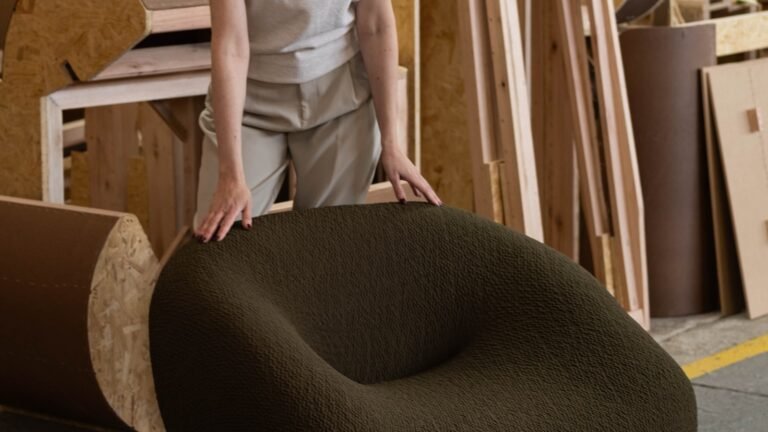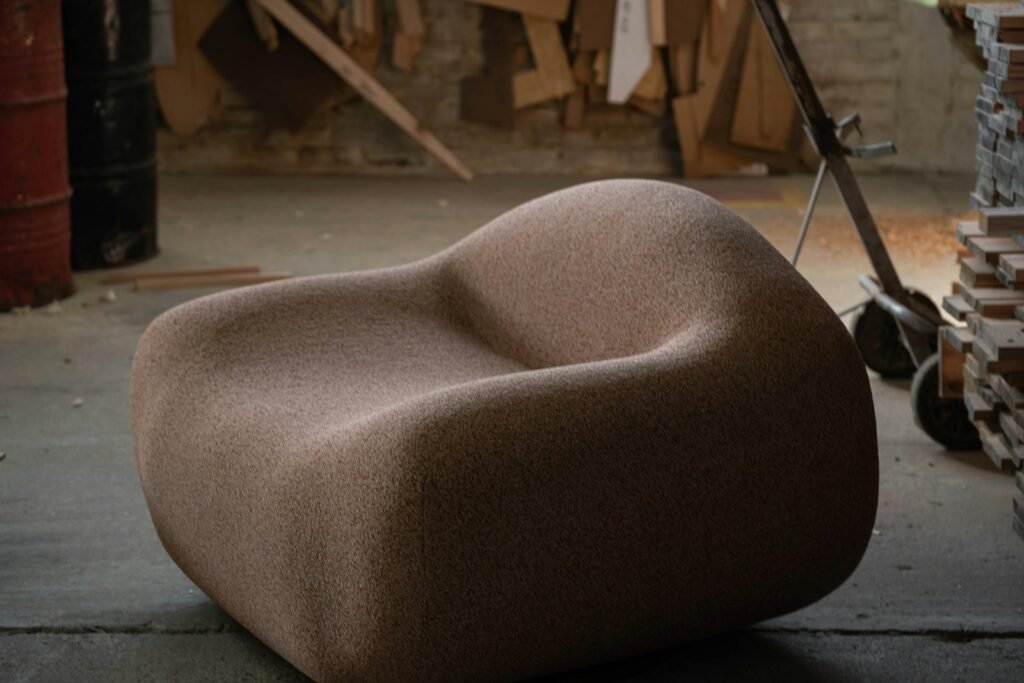
Brooklyn’s making scene in 2026 runs on shared workshops, and it concentrates in four industrial pockets: Red Hook, Greenpoint, Sunset Park, and the Brooklyn Navy Yard. The new wave is not a scatter of hobbyists selling at weekend markets. It is a network of professional studios that design, prototype, and build in the borough, sell direct to customers and to the trade, and increasingly share square footage, machines, and labor to survive New York rents.
The proof landed at New York Design Week in May 2025, when the strongest launches kept tracing back across the East River. Pelle showed 24 new works at its Red Hook studio. Item: Enso took over a Lower East Side shop with furniture built in Brooklyn. Sight Unseen spent the summer profiling a Red Hook woodshop where 40 makers run a cooperative economy. For ongoing coverage of the people shaping the city’s interiors, follow our design scene desk and our neighborhood guides.
Key takeaways
- Red Hook is the densest cluster. Piscina’s 40-maker cooperative, Pelle, and Fort Standard all work near the waterfront.
- Shared workshops are the economic engine. At Piscina, no studio has employees; the makers hire each other.
- New York Design Week 2025 read as a Brooklyn showcase, from Pelle’s 24 new works to Item: Enso’s Soft Grounds at Colbo.
- Materials lead the work: Brazilian soapstone, patinated steel, hand-built ceramics, washi paper, regional hardwoods.
- Most studios sell direct and take commissions. Trade clients run from the Edition Hotel to Four Seasons and Cartier.
- Open studio weekends in Greenpoint, Red Hook, and Industry City are the easiest way inside the buildings.
Seven studios to know
Piscina, Red Hook
Natalie Shook founded Piscina in 2013 after she and her partner Wes Rozen talked a landlord into leasing them a ground floor space stacked with plumbing supplies. It is now a 20,000 square foot shared woodshop and showroom, and the clearest picture of how Brooklyn making works today. Around 40 makers hold benches in the building. None of them keeps employees; they hire each other for milling, finishing, and install days, a structure Shook compares to barn raising. Her own sculptural furniture carries painted, layered surfaces that read more like canvases than casework. The showroom next door pairs her collection with ceramics, glassware, and furniture by New York designers she curates herself, including Luke Malaney, Jenna Graziano, and Giovanni Valdeavellano of Studio POA. Sight Unseen profiled the space in July 2025 as a model for what a design community can look like.
Pelle, Red Hook
Jean and Oliver Pelle met in the architecture program at Yale and have spent nearly two decades turning a single idea, the Bubble Chandelier of 2008, into one of the most recognizable American lighting lines. Each fixture is a cluster of hand-blown glass globes hung in loose constellations, made to order in the studio, with a dozen variations from a tight pendant to room-scale installations. The 2025 edition of New York Design Week showed how far the practice has moved past lighting. The pair opened their Red Hook studio and debuted 24 new works, including the 1x2x3 armchair and the Schema Tables, which set slabs of marble into blackened steel frames. The furniture keeps the same logic as the chandeliers: simple geometry, exacting joinery, every element fabricated in house.
Item: Enso, Brooklyn and the Lower East Side
Yuria Kailich and Joel Harding run Item: Enso as the experimental arm of a Brooklyn practice that also takes on interiors, including a recent gut renovation of a Park Slope brownstone. For NYCxDesign 2025 the duo installed Soft Grounds, their second collection, inside the clothing and objects shop Colbo on Orchard Street, rearranging the store around the work. Every piece is named for a fruit. The Carambola Table Lamp links hand-built ceramic segments under a washi paper diffuser. The Durian Table Lamp pushes light through narrow slits in hand-patinated metal. The Fig Ottoman wears repurposed silk with grouted ceramic insets at the corners. The materials list, patinated steel, ceramics, vintage silk, natural stone, doubles as a manifesto: nothing uniform, everything marked by the hand. Each object is made to order in New York.
Fort Standard, Red Hook
Gregory Buntain co-founded Fort Standard with Ian Collings in 2011, and the studio still works from the Brooklyn waterfront, building what 1stDibs called muscularly minimal furniture for the home. The recent direction is heavy in the literal sense. The Qualities of Material collection studies what stone, leather, and wood can do at the edge of their tolerances. Its showpiece, the Relief Stone Cabinet, stands 77 inches tall, is cut from Brazilian soapstone with a triangular relief carved into the doors, and weighs roughly 1,200 pounds. Production pieces are lighter but follow the same rules: faceted solid wood legs, oil finishes, hardware reduced to almost nothing. The work sells through 1stDibs, Assembly Line, and direct commissions for residential projects across the country.
Vonnegut/Kraft, Sunset Park
Katrina Vonnegut and Brian Kraft founded their studio in 2011 and design and build everything in a Sunset Park workshop. The range covers furniture, lighting, textiles, and custom architectural projects, all marked by soft geometry and visible wood grain. The pair works in regional hardwoods and keeps a deliberate balance between machine production and handwork, which lets the studio scale small batches without losing the tooling marks that make the pieces feel made. Their daybeds and low tables circulate through the Manhattan gallery Colony and the Los Angeles showroom Not So General, and a cast hardware collection with Petra extends the studio’s forms down to the scale of a drawer pull. For designers furnishing Brooklyn townhouses, this is one of the most specified local names.
Sentient Furniture, Greenpoint
Sentient is the counterargument to the idea that Brooklyn making means four people and a track saw. The studio has operated in Greenpoint for more than 20 years and now runs a 25,000 square foot workshop and gallery on Greenpoint Avenue with a team of 25 to 30 craftspeople. The output is custom furniture for residential, hospitality, and commercial projects, with a client list that includes the Edition Hotel, Four Seasons, British Airways, and Cartier. The house style favors clean upholstered forms, bent wood, and contract-grade construction that survives a hotel lobby. Sentient matters to the new wave because it proves the ceiling: a Brooklyn workshop can hold international hospitality accounts without moving production overseas.
Stitchroom, Brooklyn Navy Yard
Ella Hall and Thomas Chen run Stitchroom out of a 6,000 square foot studio in the Brooklyn Navy Yard, the city-owned industrial campus that also houses woodshops like Prospect Woodworks, Bien Hecho, and Nine Stories Furniture. Stitchroom’s specialty is upholstery: custom banquettes, headboards, ottomans, and reupholstery work built for interior designers, hospitality groups, and direct clients. The studio operates like a fabrication partner more than a label, taking a designer’s drawing through frame, foam, and fabric in one building. That trade-facing model is its own strand of the new wave. Plenty of Brooklyn making never carries the maker’s name; it ships out as someone else’s banquette, and the borough’s restaurant and hotel interiors are full of it.

The throughline: shared floors, honest materials, direct sales
Three patterns connect these studios. First, real estate strategy is design strategy. Piscina’s cooperative, the Navy Yard’s subsidized industrial space, and Industry City’s maker floors all exist because no individual furniture studio carries 20,000 square feet in New York alone. Second, the work leads with material rather than ornament: soapstone, patinated steel, regional hardwoods, hand-built ceramics. Third, the business model is hybrid. Nearly every studio sells direct to customers while serving architects and decorators, the same professionals we cover in our guide to interior design in Williamsburg. The result is a scene that looks less like a movement with a signature style and more like an industrial ecosystem, one that happens to produce some of the best furniture in the country.

Frequently asked questions
Which Brooklyn furniture designers should I know?
Seven studios define the new wave: Piscina, Pelle, Item: Enso, Fort Standard, Vonnegut/Kraft, Sentient Furniture, and Stitchroom. Red Hook is the densest cluster, with Piscina’s 40-maker cooperative, Pelle, and Fort Standard all working near the waterfront.
Can you buy directly from Brooklyn design studios?
Yes, in most cases. Pelle, Fort Standard, and Vonnegut/Kraft sell made-to-order pieces through their own sites, and Piscina runs a retail showroom in Red Hook stocked with work from its member makers. Galleries such as Colony and Assembly Line represent several of the studios for collectible pieces. If you want to compare the studios against the broader retail landscape, start with our roundup of furniture stores in NYC.
Do these studios take custom commissions?
Almost all of them, and for several it is the core business. Sentient and Stitchroom are built around custom fabrication for designers and hospitality clients. Vonnegut/Kraft, Fort Standard, and Pelle take residential commissions ranging from one-off tables to full lighting packages. Expect lead times of 8 to 16 weeks for made-to-order work and longer for fully custom pieces.
Where can you see the work in person?
Piscina’s showroom in Red Hook is open to the public and is the single best room for surveying the scene. Open studio weekends, including Greenpoint Open Studios, Red Hook Open Studios, and Industry City’s open studios in Sunset Park, put you inside the actual workshops. NYCxDesign every May brings launches and exhibitions across the borough. Our neighborhood guides cover the surrounding blocks worth a detour.
Sources
- Sight Unseen: This Red Hook Studio and Woodshop Is Redefining What a Design Community Can Look Like (July 2025)
- Sight Unseen: 20 Designers Whose Launches We Loved at New York Design Week 2025
- Hypebeast: Item: Enso Presents Soft Grounds at NYCxDesign 2025
- 1stDibs Introspective: On the Brooklyn Waterfront, Fort Standard Creates Muscularly Minimal Furniture
- Sentient Furniture: Studio, Workshop and Gallery, Greenpoint, Brooklyn
- Stitchroom: About the Studio, Brooklyn Navy Yard