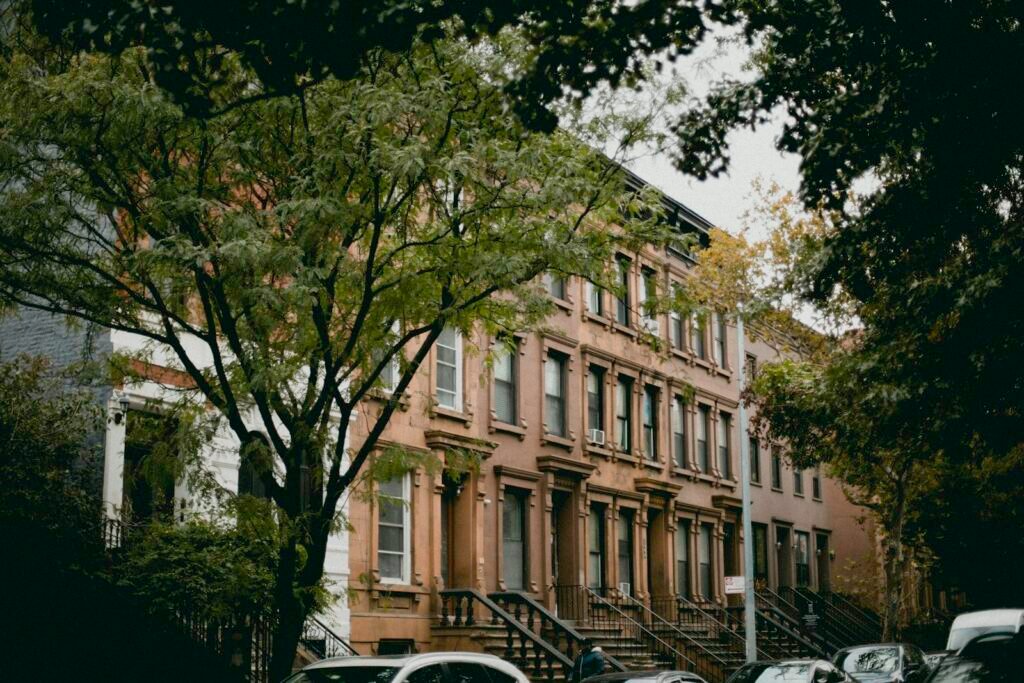
Brooklyn does not own the brownstone. The deepest stock of intact 19th century row houses in Manhattan sits in Harlem, spread across three landmarked districts, and the interiors taking shape inside them are the most confident in New York right now. If you are buying, renovating, or simply redecorating uptown, the playbook is specific: respect the 1890s shell, then make the color decisions the original builders never dared.
This guide covers the architecture, the interior style that defines the revival, the local sources worth knowing, and the landmark rules that govern what you can touch. For more street-level coverage, see our neighborhoods archive.
Key takeaways
- Harlem’s brownstone core spans three protected districts: Mount Morris Park (designated 1971, extended 2015), Strivers’ Row (designated 1967 as the St. Nicholas Historic District), and Hamilton Heights/Sugar Hill.
- Most of the housing stock went up between 1880 and 1900, in neo-Grec, Romanesque Revival, Queen Anne, and Renaissance Revival styles.
- The prevailing interior look keeps original mahogany and oak woodwork dark and answers it with saturated color and pattern.
- Sheila Bridges’ Harlem Toile de Jouy, designed in the neighborhood, has become the revival’s signature wallpaper.
- Exterior work in the historic districts needs Landmarks Preservation Commission approval. Most interior work does not, though Department of Buildings permits still apply.
Three districts, three personalities
Harlem’s row houses were a speculative bet. When the elevated railways reached the neighborhood in 1880, developers built block after block of housing for middle and upper middle class New Yorkers moving north. The bet went sideways within a generation, which is partly why so much survived. What stands today is the most coherent run of Gilded Age residential architecture in Manhattan.
Mount Morris Park
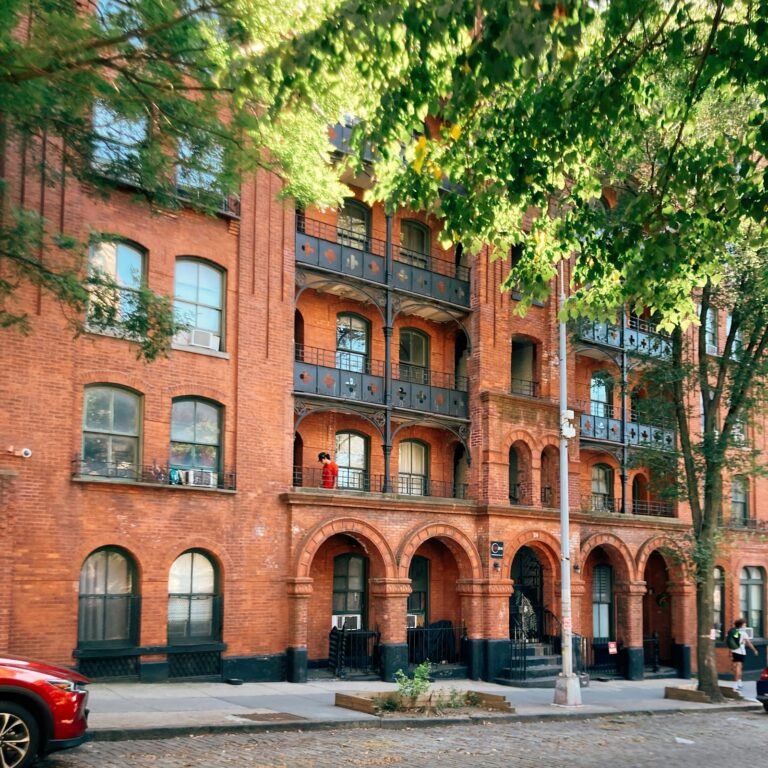
The 16-block district runs from West 118th to West 124th Street between Fifth Avenue and Adam Clayton Powell Jr. Boulevard, facing Marcus Garvey Park. The city designated it in 1971 and added a 2015 extension covering more than 250 additional row houses. The fronts here are Romanesque Revival, neo-Grec, and Queen Anne, in brick and brownstone. The Mount Morris Park Community Improvement Association, founded in 1981, runs house tours that get you inside private parlors. Go on one before you renovate.
Strivers’ Row
The King Model Houses on West 138th and 139th Streets are the aristocrats of the neighborhood. Developer David H. King Jr. built them between 1891 and 1893 and hired three separate architecture teams. James Brown Lord drew Georgian houses in red brick and brownstone on the south side of West 138th. Bruce Price and Clarence S. Luce worked in yellow brick and white limestone. McKim, Mead & White delivered Italian Renaissance fronts in brown brick along the north side of West 139th. The houses share rear service alleys, a rarity in Manhattan, and some gates still read “Private Road, Walk Your Horses.” By the 1920s the blocks housed Harlem’s Black professional class, and the Strivers’ Row nickname stuck. The city landmarked the district in 1967, and it joined the National Register of Historic Places in 1975.
Hamilton Heights and Sugar Hill
Up the ridge in West Harlem, the row houses came slightly later, between 1881 and 1898, after a cable car line opened along Amsterdam Avenue. Architects like Henri Fouchaux and A. B. Jennings treated entire blockfronts as single compositions, mixing neo-Grec, Queen Anne, Renaissance Revival, and Beaux-Arts detail so that a street reads as one designed object. Convent Avenue is the showpiece walk. Alexander Hamilton’s 1802 country house, the Grange, designed by John McComb Jr., sits in St. Nicholas Park as a free National Park Service museum, and its restored Federal rooms are a useful primer on proportion.
| District | Landmarked | Built | Signature styles |
|---|---|---|---|
| Mount Morris Park | 1971, extended 2015 | 1880s to 1890s | Romanesque Revival, neo-Grec, Queen Anne |
| Strivers’ Row (St. Nicholas HD) | 1967 | 1891 to 1893 | Georgian, Italian Renaissance |
| Hamilton Heights / Sugar Hill | Multiple designations and extensions | 1881 to 1898 | Neo-Grec, Queen Anne, Renaissance Revival, Beaux-Arts |
The interior style: original detail, then conviction
Walk into an intact Harlem parlor floor and the assets are obvious. High ceilings. Double doors between front and rear parlors. Plaster crown and ceiling medallions, carved mantels, pier mirrors, and a mahogany or oak staircase that anchors the whole house. These are the details a century of cheap conversions stripped out of lesser buildings.
The renovating instinct of the 2010s was to paint all of it white. Harlem largely declined. The prevailing style uptown keeps the woodwork dark and waxed, then surrounds it with saturated color: deep greens in the parlor, oxblood and ochre in dining rooms, pattern on the walls rather than art leaning against them. When British designer Sarah Brown redid a five-story Hamilton Heights brownstone, she ran cobalt, green, and yellow through rooms that kept their original fireplaces, and the house reads as more historic for it, not less. Color is not a violation of these interiors. Beige is.
No single object captures the attitude better than Harlem Toile de Jouy, the wallpaper interior designer Sheila Bridges created after years of searching for a toile that reflected her own neighborhood. It borrows the 18th century French format and fills it with scenes of Black American life. The pattern now sits in the collections of the Cooper Hewitt and the Victoria & Albert Museum, and it hangs in parlors all over the neighborhood. That is the local formula compressed into one room: heritage format, contemporary point of view, zero apology.
Read our Park Slope brownstone guide back to back with this one and the gap is plain: Park Slope whispers in plaster pink and limewash. Harlem speaks in full sentences.
Where to shop the neighborhood
Start local before you book a Flatiron showroom trip. These are operating storefronts, not memories.
- NiLu, 191 Lenox Avenue. Katrina Parris’s gift and lifestyle shop between West 119th and 120th Streets stocks candles, home accents by Harlem artists, and vintage accessories Parris sources herself.
- Harlem Furniture, 8-12 West 125th Street. A high-volume furniture and decor store on the main commercial strip, useful while the slow pieces are on order.
- Paramount Decorators, 124 West 125th Street. An old-line decor source a block away.
- The Mount Morris Park house tours. Not a store, but the best sourcing education in the neighborhood. Seeing how owners have handled mantels, shutters, and stair runners beats any image board.
- Hamilton Grange, St. Nicholas Park. Free, Federal, and instructive: restored rooms that show what disciplined period color looks like.
Renovation notes: what the landmark rules actually say
If your house sits inside one of the historic districts, the Landmarks Preservation Commission reviews changes to the exterior, and that includes the rear facade, not just the stoop side. Ordinary maintenance is exempt: replacing broken window glass, repainting in the existing color, caulking. Work that follows the Commission’s published rules can be approved at staff level. Work that does not goes to the full Commission at a public hearing, which adds months.
Brownstone itself is soft sandstone, and proper facade restoration follows a set sequence: document the original detail, chip the failed surface back to a stable base, rebuild it in layers of cement, then apply a cementitious brownstone coat with the historic detail tooled back in. Budget it as its own line item.
Interiors are generally outside Landmarks jurisdiction, so the parlor paint argument is between you and your household. Plumbing, structural, and mechanical work still runs through the Department of Buildings. For what the wet rooms will actually cost, see our NYC bathroom renovation cost guide, and browse the rest of our renovation guides before you sign a contractor.
Frequently asked questions
Do I need Landmarks approval to renovate a Harlem brownstone interior?
Generally no. The Landmarks Preservation Commission’s jurisdiction in the historic districts covers exterior changes, front and rear. Interior renovations proceed under normal Department of Buildings permits unless the building has a separately designated interior landmark. The moment your project touches windows, doors, the stoop, or the facade, Landmarks is in the room.
When were Harlem’s brownstones built?
The bulk of the stock dates from 1880 to 1900, triggered by the elevated railway’s arrival in 1880. Strivers’ Row went up between 1891 and 1893. The Hamilton Heights row houses date from 1881 to 1898. That tight window is why the streetscapes feel so unified.
Which blocks should I walk first?
Three walks cover the essentials. West 138th and 139th Streets between Adam Clayton Powell Jr. and Frederick Douglass Boulevards for Strivers’ Row. Mount Morris Park West facing Marcus Garvey Park for the Romanesque heavyweights. Convent Avenue from West 141st to 145th for Hamilton Heights, ending at the Grange.
Sources
- St. Nicholas Historic District (Strivers’ Row), Wikipedia
- NYC Landmarks Preservation Commission: Mount Morris Park Historic District Extension
- Historic Districts Council: Hamilton Heights/Sugar Hill Historic District
- NYC LPC: Permits and Making Alterations
- NiLu Gift Shop, 191 Lenox Avenue
- Sheila Bridges: Harlem Toile de Jouy