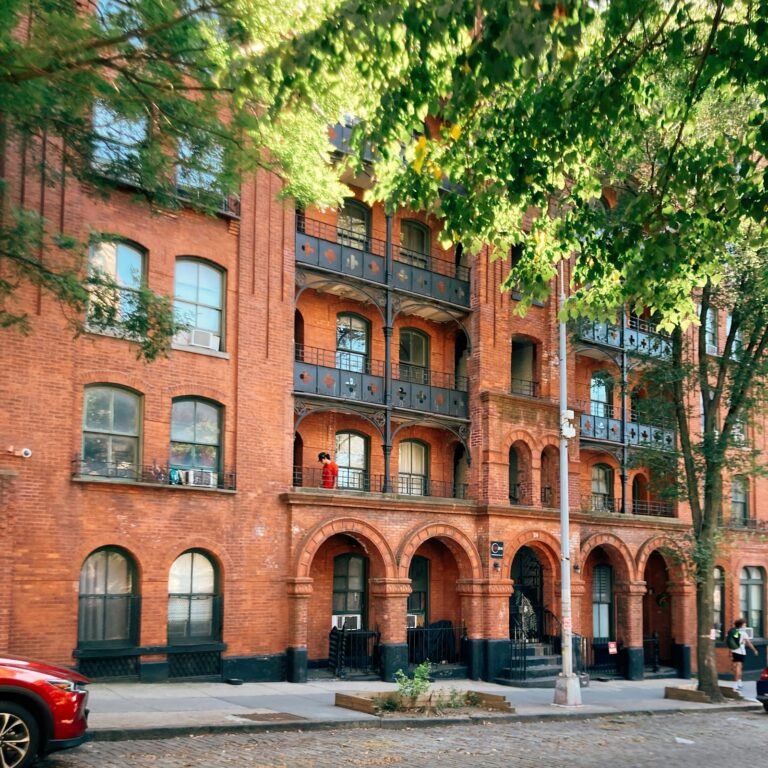
Brownstone Brooklyn has a loud side and a quiet side. Park Slope gets the magazine spreads. Cobble Hill and Carroll Gardens, two adjoining districts west of the Gowanus, get the better-preserved blocks and ask less of a decorator than almost anywhere in New York. The local doctrine is simple: the house already did the work, so keep the plaster moldings, marble mantels, and parquet, paint in quiet colors, buy fewer and better things, and let the 1870s bones carry the room. Both neighborhoods are landmarked. The Cobble Hill Historic District was designated on December 20, 1969 and holds 796 buildings dating from the 1830s to the 1920s. Carroll Gardens followed in 1973, organized around a street plan the surveyor Richard Butt drew in 1846 that required front yards 33 feet deep between Henry and Smith Streets. The gardens, not the facades, are the signature.
Key takeaways
- Original detail leads. Plaster crowns, ceiling medallions, marble mantels, and parquet borders set the design direction. Everything else is layered around them.
- Cobble Hill is the older, more varied district. Greek Revival and Italianate rows from the 1830s on, bounded roughly by Atlantic Avenue, Court, Degraw, and Hicks Streets.
- Carroll Gardens is the front-garden district. Neo-Grec and late Italianate brownstones built between 1869 and 1884, set behind 33-foot planted yards.
- The prevailing interior style is quiet and family-first. White oak, natural textiles, restored ornament, color in small doses. Less staged than Park Slope.
- The shopping has moved to Court Street. The old Atlantic Avenue antiques corridor has mostly emptied out. The reliable home stores in 2026 are small and independent.
Two historic districts, one rowhouse grammar
Cobble Hill built out between the 1830s and the 1920s, and the designation report reads like a style survey. Greek Revival and Italianate rowhouses form the backbone, with Romanesque Revival, Gothic Revival, Queen Anne, French Second Empire, and neo-Grec scattered through the 796 contributing buildings. The district runs roughly from Atlantic Avenue south to Degraw Street between Court and Hicks. The Landmarks Preservation Commission extended it in 1988 to pick up three more houses on Henry Street. Stoops sit close to the sidewalk here, and the blocks feel denser and more urban than what lies south of Degraw.
Carroll Gardens reads differently from the curb because of one decision made before most of its houses existed. Richard Butt’s 1846 survey platted deep front yards, and when the rows went up between 1869 and 1884 they went up behind them: two- and three-story brownstones in neo-Grec and late Italianate styles, with uniform setbacks, matched cornice lines, and even stoop heights. The historic district itself is small, designated in 1973 and listed on the National Register in 1983, but the garden setback pattern extends well beyond its borders. No other rowhouse neighborhood in Brooklyn puts this much planted ground between the front door and the street.
Inside, the two neighborhoods speak one language. A raised parlor floor with the tallest ceilings in the house. Plaster crown moldings and medallions. Marble mantels, sometimes two to a floor. Parquet with inlaid borders, pocket doors if you are lucky. The quantity and condition of that surviving detail is the single biggest variable in any project here, and it is the first thing a designer inventories. Our neighborhoods coverage tracks how this building stock shifts block by block.
The look: quieter than Park Slope, built for families
The dominant interior approach in both neighborhoods is warm, low-key, and built around daily family use. It is not period restoration and it is not gut minimalism. In a recent renovation of an 1850s Anglo-Italianate Cobble Hill house, designer Lauren Williams Russett of Studio Solenne set new white oak floors and millwork against the original plaster moldings and tin ceilings, then let textiles and collected art do the personality work. Another Cobble Hill project, by Coughlin Scheel Architects, laid white oak herringbone across the parlor level and straight planks upstairs, with new millwork shaped to echo the curve of the original entry door. The pattern repeats across published projects: new wood in pale tones, old plaster restored, color applied in deliberate, small doses.
The standard plan move is equally consistent. Front rooms stay formal and intact. The modern intervention happens at the rear, where renovations open the back wall of the parlor and garden floors with steel-and-glass to pull daylight into deep, narrow rooms. In Carroll Gardens the front garden adds a second outdoor room that most brownstone owners never get, and locals treat it as part of the house: planted, fenced, furnished, and used. The trade-offs of living this way, in vertical houses with landmark obligations, come up again and again in our city living reporting.
Where to shop, verified for 2026
First, the honest news. The Atlantic Avenue antiques corridor that once anchored home shopping here has mostly emptied. Horseman Antiques closed its five-story showroom at 351 Atlantic Avenue after the building sold for 18 million dollars. City Foundry left the avenue and now operates from Industry City in Sunset Park. Holler & Squall gave up its storefront and sells online. What remains nearby is smaller, newer, and concentrated on Court Street and the western edge of Carroll Gardens. These four are open and confirmed operating in 2026:
| Shop | Address | Why go |
|---|---|---|
| The Six Bells | 221 Court Street, Cobble Hill | Country-inspired homeware from small makers plus antiques, opened in 2022 by Audrey Gelman. Quilts, ceramics, and tableware suited to parlor-floor rooms. |
| Wanderlustre | 262 Court Street, Cobble Hill | Gift and home boutique open since 2015, with objects gathered from travel and a garden space behind the shop. |
| Brooklyn General Store | 128 Union Street, Carroll Gardens | Yarn, fabric, and notions since 2003, inside the old Frank’s Department Store with its original shelving and rolling ladders. The source for anyone making soft furnishings by hand. |
| Collyer’s Mansion | 179 Atlantic Avenue, Brooklyn Heights border | Color, print, and pattern: globally sourced textiles, lighting, and decor, with an in-house design studio. Open Wednesday through Sunday. |
The mix matters more than any single store. The neighborhood look depends on combining a few new anchor pieces with vintage and handmade finds, which is exactly what this remaining retail supports.
Decorating and renovation notes
- Inventory before you design. Count and condition-check the moldings, mantels, doors, and parquet first. The survivors set the direction, and stripping paint off carved detail is usually worth the labor bill.
- Assume landmark review outside. Facades, stoops, windows, cornices, and in Carroll Gardens the front gardens all fall under Landmarks Preservation Commission oversight. Budget months, not weeks, for approvals on exterior work.
- Take light from the back. The rear wall is the sanctioned place for a big modern gesture. Steel-and-glass openings on the parlor and garden floors transform deep floor plans without touching the street face.
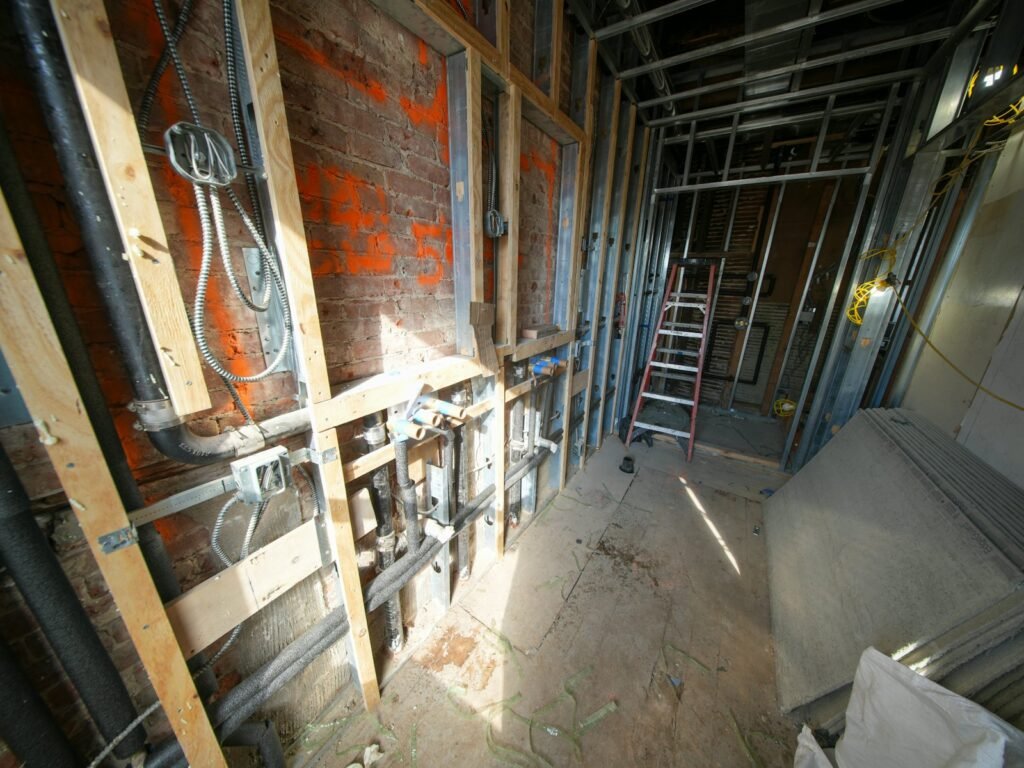
- Replace systems, keep surfaces. The standard playbook renews plumbing, electrical, and HVAC completely while restoring visible historic finishes. Bathrooms are where budgets break; our NYC bathroom renovation cost guide covers real numbers.
- Respect the setback. In Carroll Gardens the front yard is the reason the district exists. Replant freely, repair the iron fence, but do not pave it.
For sequencing a full project, from scope to contractor selection, start with our renovation guides.
Frequently asked questions
How are Cobble Hill and Carroll Gardens different from each other?
Cobble Hill is older and more architecturally varied, with Greek Revival and Italianate rows from the 1830s onward and stoops close to the sidewalk. Carroll Gardens is more uniform, built mostly between 1869 and 1884 in neo-Grec and late Italianate styles, and its houses sit behind 33-foot front gardens platted in 1846. Inside, the rooms are nearly interchangeable.
Do landmark rules restrict interior renovations?
Generally no. Landmarks Preservation Commission review covers what is visible from the street: facades, stoops, windows, cornices, rooflines, and front yards. Interior work proceeds under normal Department of Buildings permits. Most owners preserve interior detail anyway, because original ornament is a price driver in both districts.
Is Atlantic Avenue still an antiques destination?
Mostly not. The corridor that held dozens of antique dealers in the 1970s and 1980s has thinned to almost none. Horseman Antiques closed after its building sold, City Foundry moved to Industry City, and Holler & Squall went online-only. For vintage now, locals trek to Industry City or buy at the smaller Court Street shops that mix antiques into new stock.
Sources
- Cobble Hill Historic District, Wikipedia
- Cobble Hill Historic District Designation Report, NYC Landmarks Preservation Commission
- Carroll Gardens Historic District, Wikipedia
- Inside an Interior Designer’s 1850s Anglo-Italianate Brownstone, Remodelista
- Horseman Antiques to Close Following 18 Million Dollar Sale, Brownstoner
- About Us, Brooklyn General Store