Chelsea interior design is shaped by what surrounds it: more than 200 contemporary art galleries, an elevated park threaded between the buildings, and a stretch of starchitect towers unmatched anywhere else in Manhattan. The defining move in Chelsea is to treat the home like a gallery, keeping walls calm and rooms open so the art, the architecture, and the High Line view do the talking. This is service journalism for anyone decorating a Chelsea apartment, planning a loft renovation, or trying to understand why homes here read the way they do.
Key takeaways
- The Chelsea gallery district runs roughly West 19th through 27th Streets between 10th and 11th Avenues, home to more than 200 galleries including Gagosian, David Zwirner, Pace, and Hauser & Wirth.
- The prevailing residential style is art-forward modern: open plans, white or quiet walls, gallery lighting, and natural materials that let work and view take the lead.
- The High Line, New York’s only elevated park, drew Pritzker-winning architects to West Chelsea and turned the neighborhood into a showcase of contemporary design.
- Signature buildings include Thomas Heatherwick’s Lantern House, Zaha Hadid’s 520 West 28th Street, and Frank Gehry’s IAC Building.
- Classic Chelsea lofts sit in 1920s-era buildings with high ceilings, cast-iron columns, masonry walls, and large factory windows.
- Galleries are free to enter Tuesday through Saturday, which makes a Chelsea walk one of the best free design educations in the city.
The architecture: lofts, the gallery district, and the High Line
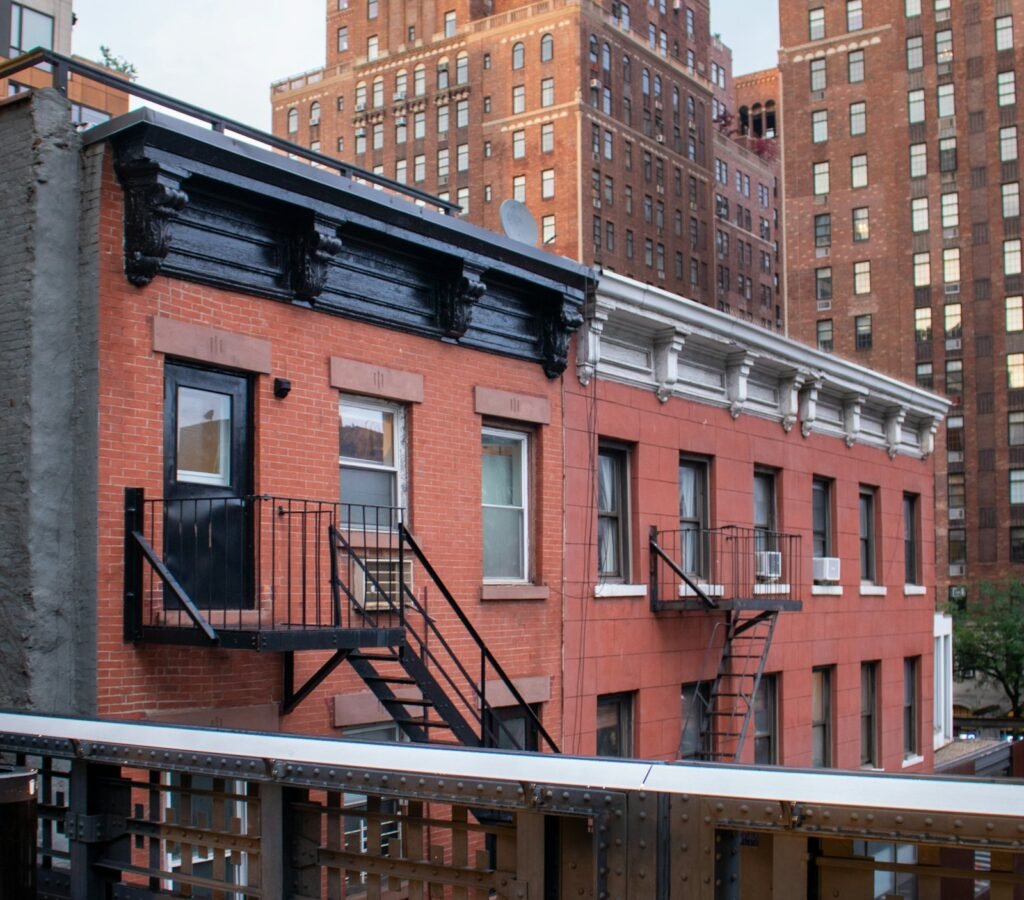
Chelsea was once a district of warehouses and light manufacturing along the Hudson, and that industrial past still sets the terms for how its homes look. The classic Chelsea loft sits in a 1920s-era building with towering ceilings, exposed timber or cast-iron columns, masonry perimeter walls, and large factory-style windows. These buildings hand you a spatial framework where volume, light, and rhythm are already built in, which is why renovation work here so often starts by clearing space rather than adding it.
The gallery district is the second force. Concentrated on the far-west blocks between 10th and 11th Avenues, it became the epicenter of the American contemporary art market after dealers moved into former warehouse spaces in the 1990s. The galleries set a visual standard the apartments quietly echo: tall white rooms, even light, and a deference to whatever hangs on the wall. For more on how protected and industrial buildings get brought up to modern standards, see our renovation guides.
The third force is the High Line. The 1.45-mile elevated park, built on a former freight rail line, drew some of the world’s best architects to West Chelsea and turned the neighborhood into a corridor of ambitious residential architecture. The marquee buildings are worth knowing because they define the local design vocabulary.
| Building | Architect | What makes it Chelsea |
|---|---|---|
| Lantern House, 515 West 18th Street | Thomas Heatherwick | Bulging, lantern-shaped bay windows on two towers joined by a glass lobby beneath the High Line |
| 520 West 28th Street | Zaha Hadid | Curved, hand-finished steel facade with interlaced split levels echoing the layered cityscape |
| IAC Building, 555 West 18th Street | Frank Gehry | White glass curtain wall shaped like a billowing sail, an early West Chelsea landmark |
The prevailing style: art-forward modern
If Tribeca runs on warm minimalism, Chelsea runs on art-forward modern. The room is built to host work, whether that is a serious collection or a single large canvas, so the walls stay quiet and the lighting stays even. The aesthetic leans industrial-modern: reclaimed or wide-plank white oak floors, polished concrete, gallery-style track or recessed lighting, and floor-to-ceiling glass that visually merges the High Line with the living room.
What keeps it from feeling cold is the same instinct showing up across Manhattan interiors right now: warmth layered over the hard shell. Contemporary Chelsea lofts pair the exposed brick and structural grid with white oak, wool, linen, and a restrained palette, often built around soft, light-enhancing neutrals rather than stark white. The open-plan “great room,” where living, dining, and kitchen share one continuous volume, is the standard organizing move because it amplifies the grandeur the building already has. For how this plays out at apartment scale, browse our home tours and the wider design scene.
Galleries and stores worth knowing
The galleries are the best design resource in the neighborhood, and they are free. All of the following are operating in 2026 and within walking distance of one another. Standard hours run Tuesday through Saturday, roughly 10am or 11am to 6pm, and Thursday evenings are the traditional night for openings.
- Gagosian, 555 West 24th Street, a museum-scale flagship that has grown to absorb adjacent former gallery spaces on the same block.
- David Zwirner, 525 West 19th Street, representing many of the world’s leading contemporary artists, with a Renzo Piano-designed tower in the works on West 21st Street.
- Pace Gallery, with a Chelsea location at 540 West 25th Street, one block north of the West 24th Street cluster.
- Hauser & Wirth, 542 West 22nd Street, building out additional space on the same street.
For furnishing the home, Chelsea and its edges hold real options. West Elm anchors accessible modern design at 112 West 18th Street, a cornerstone for clean, livable pieces. Just north of the neighborhood, ABC Carpet & Home at 888 Broadway remains one of New York’s most iconic furniture and decor destinations, six floors of furniture, lighting, textiles, and antiques that pull from modern Italian to reclaimed wood and handmade ceramics. For trade-level sourcing, the New York Design Center at 200 Lexington Avenue, a short ride east in Murray Hill, houses close to 100 showrooms across more than 500 furniture lines inside a landmark 1926 building.
Practical decorating notes
- Plan the walls first. Decide where art will live before you choose furniture, and keep large stretches of wall quiet so work has room to breathe.
- Borrow the gallery lighting. Even, adjustable track or recessed lighting reads as intentional and flatters both art and architecture better than a few decorative fixtures.
- Protect the view. If you have High Line or skyline glass, float furniture and keep window treatments minimal so the view stays the centerpiece.
- Warm the shell. Counter concrete, steel, and brick with white oak, wool, and linen so the room feels lived-in rather than austere.
- Unify the open plan. Use rugs, lighting, and low furniture to define living, dining, and kitchen zones inside one volume rather than adding walls.
- Use the neighborhood as research. A free afternoon walking the galleries teaches more about scale, light, and restraint than any mood board.
For more on adapting these ideas to apartment-scale Manhattan homes, see our coverage of city living and the wider neighborhoods series.
Frequently asked questions
What defines Chelsea interior design?
Chelsea interior design is art-forward modern. Rooms are built like quiet galleries with open plans, calm walls, even lighting, and natural materials, so a collection of art and the surrounding architecture take the lead. In loft buildings, that style sits on top of original industrial bones such as high ceilings, cast-iron columns, and large factory windows.
Where is the Chelsea gallery district?
The Chelsea gallery district runs roughly West 19th through 27th Streets between 10th and 11th Avenues, near the southern end of the High Line. More than 200 galleries operate there, including Gagosian, David Zwirner, Pace, and Hauser & Wirth. Most are free to enter Tuesday through Saturday.
What kinds of homes does Chelsea have?
Chelsea mixes converted warehouse lofts in 1920s-era buildings, pre-war co-ops, and a striking set of new starchitect condominiums along the High Line, including Thomas Heatherwick’s Lantern House and Zaha Hadid’s 520 West 28th Street. Lofts offer industrial character and volume, while the new towers offer sculptural architecture and skyline glass.
Sources
- Sieber International, Chelsea NYC guide to High Line living and starchitecture
- Fontan Architecture, high-end residential design in Chelsea
- Decode NYC, a local’s guide to Chelsea’s gallery scene
- Dezeen, Heatherwick’s Lantern House on the High Line
- Zaha Hadid Architects, 520 West 28th Street
- Decode NYC, furniture and decor stores in Chelsea
- New York Design Center, about 200 Lex