Park Slope is the rare New York neighborhood where the interior design conversation starts at the front door and the parlor floor, not the furniture. The defining move in a Park Slope home is restoration over reinvention: keep the carved woodwork, the plaster moldings, the parquet borders, and build a warm, family-scaled, contemporary life around them. Hundreds of brownstone and limestone row houses went up here between 1870 and 1890, and roughly 1,948 buildings were locked into the Park Slope Historic District in 1973, with later extensions added in 2012 and 2016. That history is not a backdrop. It is the brief every designer working in the Slope has to answer.
Key takeaways
- Original detail leads. Carved moldings, burled mahogany doors, plasterwork, and parquet floors are the design driver, not an afterthought.
- The style is brownstone revival. Warm, layered, family-oriented rooms that pair historic grandeur with real-life livability.
- Most homes are Neo-Grec or Italianate row houses. Built 1870 to 1890, the streetscape reads as a symmetrical row, not a collection of one-off houses.
- The rear wall is where the modern move happens. Many renovations open the back of the parlor and garden floors with steel and glass while leaving the front rooms intact.
- The shopping is local. Fifth and Seventh Avenues hold long-running housewares, vintage, and home stores rather than big-box showrooms.
- Landmark rules apply. Most of the neighborhood sits inside a historic district, so exterior work is reviewed.
The architecture: what is actually behind the stoop
Park Slope’s housing stock is overwhelmingly the 19th-century row house, and the styles run in a clear sequence. The Italianate came first, popular from the 1850s into the early 1870s, recognizable by ornate hand-carved brackets around windows and doorways and pediments above the doors. Neo-Grec followed from roughly 1872 to 1882 and, according to local historians, there are more Neo-Grec buildings in Park Slope than any other style. The look is more linear and incised, and it spread quickly because the pneumatic drill made it cheap to carve repeating patterns into brownstone. Romanesque Revival and Queen Anne fill out the later blocks.
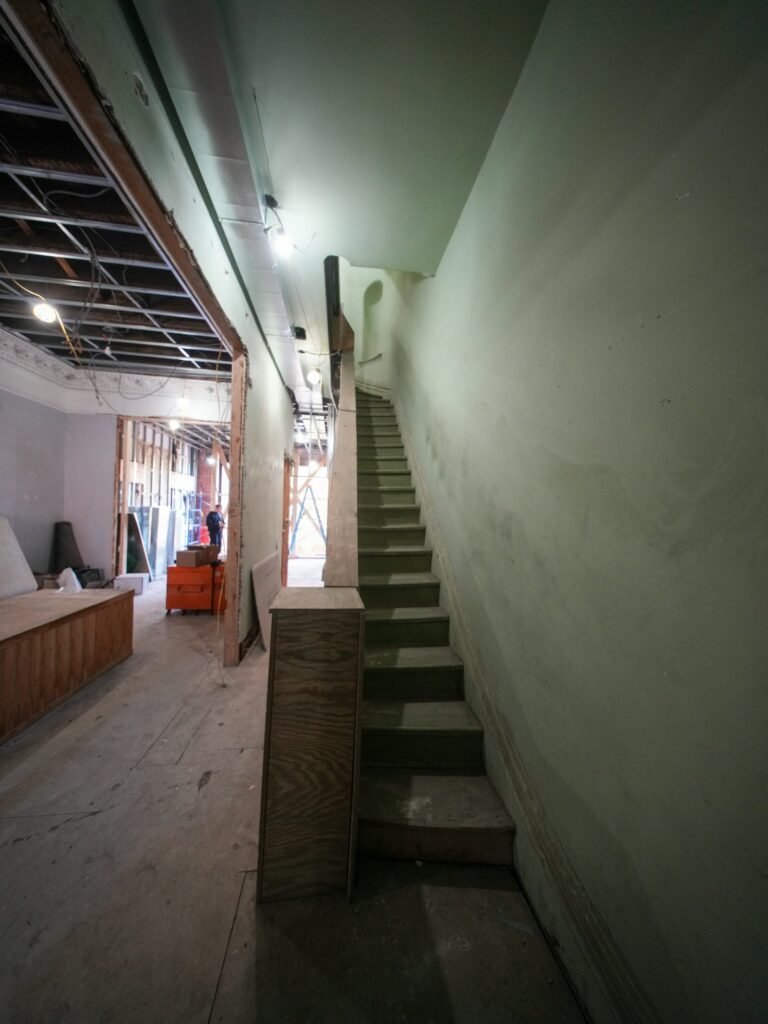
What that means inside is consistent. Expect a stoop and a raised parlor floor with the tallest ceilings, decorative plaster moldings and ceiling medallions, parquet floors with inlaid borders, original mantels, and elaborate woodwork that ranges from restrained to deeply carved depending on the date and the budget of the original owner. Designers who work here repeatedly describe the quantity and quality of that original woodwork as the single biggest factor shaping a project. For more neighborhood-by-neighborhood context, our neighborhoods coverage tracks how Brooklyn’s building stock differs block to block.
The prevailing style: brownstone revival, warm and family-first
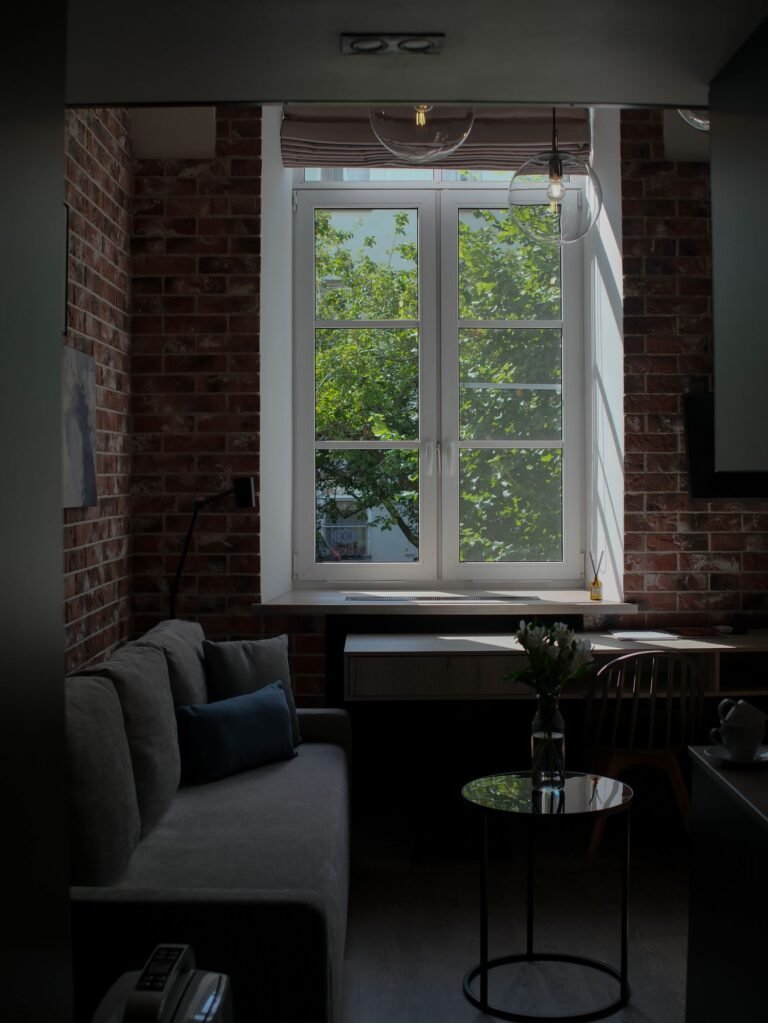
The dominant interior aesthetic in Park Slope is best called brownstone revival. It is not period-museum restoration and it is not gut-renovation minimalism. It is a warm, layered, lived-in approach that treats the historic envelope as a feature and then makes the rooms genuinely usable for families. Designers lean on wool rugs, velvet and linen upholstery, woven throws, and collected objects to add texture against the formality of the moldings. Heirlooms, ceramics, and art carry the personal layer.
There is a real tension designers navigate, and it shows up in how they handle ornament. Some neutralize heavy carved detail with calmer, simpler furnishings so the architecture can breathe. Others double down, restoring burled mahogany doors and intact moldings and then adding bold color or quirky accents so the rooms feel personal rather than precious. Both are legitimate, and both keep the original detail. You can see the same instinct play out in real homes across our home tours and in the way owners frame trade-offs in our city living stories.

Brooklyn home and design stores worth knowing
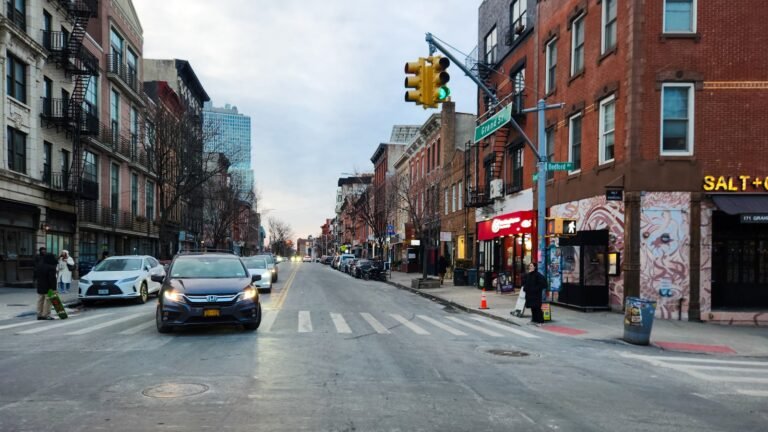
Park Slope’s retail spine is Fifth and Seventh Avenues, and the strongest home shopping is independent rather than chain. A few worth knowing, all confirmed operating in 2026:
- Tarzian West for Housewares, 194 Seventh Avenue. A neighborhood kitchen and housewares store that has served Park Slope for more than 50 years, covering tabletop, serveware, and cookware.
- Annie’s Blue Ribbon General Store, 232 Fifth Avenue. A modern general store mixing country-store charm with city-lifestyle goods, gifts, and home pieces.
- Time Galleries, in business since 1988. A deep antique furniture and housewares source with mirrors, paintings, and rugs, and labels like Baker, Herman Miller, and Drexel Heritage moving through.
- Housing Works, the nonprofit thrift chain with a Park Slope branch, a reliable spot for secondhand furniture and housewares with the proceeds going to its mission.
The pattern here matters for how you furnish a Slope home: the neighborhood rewards mixing vintage and antique finds with a few new anchor pieces, which is exactly what the layered brownstone-revival look depends on. We cover more of these makers and shops in our design scene reporting.
Renovating and decorating a brownstone: practical notes
If you own or are buying in Park Slope, a few realities shape every project.
- Assume landmark review on the exterior. Most of the neighborhood sits inside the Park Slope Historic District, so facade, stoop, window, and cornice changes are regulated. Plan timelines around that.
- Inventory the woodwork before you design. The amount and condition of original moldings, doors, and floors should set your direction. Stripping decades of paint off original detail is a common and worthwhile move.
- Light from the back. The classic upgrade is opening the rear of the parlor and garden floors with wide steel-and-glass openings to pull daylight into deep, narrow rooms while leaving the front parlor intact.
- Respect the floor plan, then ease it. Victorian-era rooms were small. Designers create flow by selectively widening openings rather than gutting the layout, often keeping original parquet and patching it surgically.
- Replace systems, keep surfaces. The standard approach is to renew plumbing, electrical, and HVAC fully while restoring the visible historic finishes that give the house its value.
For deeper, step-by-step guidance on sequencing a project like this, see our renovation guides.

Related reading
- Brooklyn Heights Interior Design: Inside New York’s First Historic District
- Bed-Stuy Brownstone Interiors: Inside Brooklyn’s Great Victorian Survivor
Frequently asked questions
What does a brownstone interior look like in Park Slope?
Expect a stoop and a raised parlor floor with the tallest ceilings, decorative plaster moldings and ceiling medallions, parquet floors with inlaid borders, original mantels, and elaborate woodwork that ranges from restrained to deeply carved depending on the date and the budget of the original owner.
What style are most Park Slope brownstones?
Most are 19th-century row houses built between 1870 and 1890, predominantly Neo-Grec and Italianate, with Romanesque Revival and Queen Anne mixed into the later blocks. Park Slope is often cited as having more Neo-Grec buildings than any other architectural style.
Can I change the front of a Park Slope brownstone?
Usually not without review. Most of the neighborhood falls within the Park Slope Historic District, designated in 1973 and later extended, so exterior changes are subject to Landmarks Preservation Commission oversight. Interior work generally has more freedom.
What does the typical Park Slope interior look like today?
Warm and layered rather than stark. The current brownstone-revival approach keeps original moldings, mantels, and parquet, then adds wool rugs, velvet or linen upholstery, collected art, and family pieces to make formal rooms livable for everyday use.
Sources
- Park Slope Historic District, Wikipedia
- Historian Suzanne Spellen on Park Slope’s history and architecture, Bklyner
- Woodwork-laden Park Slope townhouse renovation, Brownstoner
- Peeling back the layers in a Park Slope brownstone, Remodelista
- Best shops in Park Slope, Time Out New York
- Tarzian West for Housewares
- Annie’s Blue Ribbon General Store