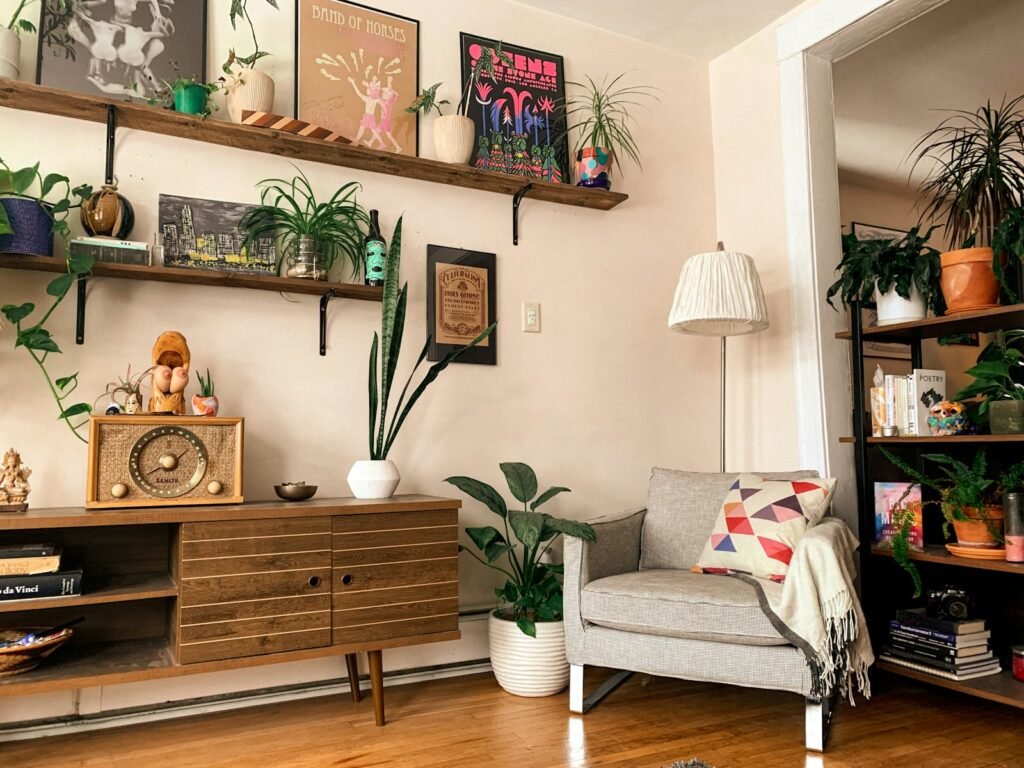
The fix for a tight apartment is not a bigger closet you do not have. It is two moves you can make today. Go vertical, and make every piece of furniture do two jobs. Floor space is finite in a 400-square-foot studio. Wall height is not, and a bed or bench that hides storage gives you a closet you were already paying rent for. Everything below follows from those two ideas, zone by zone.
Key takeaways
- Treat wall height as storage. Shelving that runs to the ceiling and over-door racks reclaim square footage you already pay for.
- Buy furniture that hides storage: storage beds, lift-top ottomans, and lift-top coffee tables turn dead volume into usable space.
- The space under the bed holds the most. A queen storage bed gives roughly 84 by 63 inches of hidden room.
- Doors are storage. Over-the-door and behind-door racks add capacity in closets, the bath, and the entry without a single screw.
- Renters can do all of this with tension rods, adhesive hooks, and freestanding pieces that leave no holes.
- One purge before you organize. Storage that holds things you do not use is just nicer clutter.
Go vertical and use the ceiling gap
Most apartments waste the top two feet of every wall. That band above eye level is the cheapest storage you will ever find. Run shelving to the ceiling instead of stopping at a standard 72-inch bookcase, and a single wall can carry a season of stored items off the floor. Public Storage frames the principle plainly: when you are working with limited square footage, every inch of height becomes valuable storage real estate.
Tall and narrow beats short and wide. A bookcase that climbs the wall holds more than a low credenza of the same footprint, and it draws the eye up, which makes a small room read taller. Floating shelves, pegboards, and stacked cube units do the same work in a kitchen or home office. Jackie O’Brien of Clarity Through Organization, quoted by Public Storage, puts it this way: using vertical storage is beneficial for any category and room as long as you have the space to do it. Keep the things you reach for daily between knee and shoulder height, and bank the top shelves for off-season gear and bulk supplies.
Furniture that hides storage
In a small space, a piece that only does one thing is a piece you cannot afford. The pieces that earn their footprint store something inside them. BuzzFeed’s small-space furniture roundup names the usual suspects: convertible sofa beds, lift-top coffee tables, wall-mounted desks, and storage benches built for compact living.
A lift-top ottoman is the easiest win. It works as a footrest, extra seating, and a coffee table, and the top lifts to hide blankets, games, or remotes. Look for a flat, sturdy top so it holds a tray, and a safety hinge so the lid does not slam. A lift-top coffee table does the same trick and raises the surface to eat or work without hunching. Here is how the common double-duty pieces compare on what they actually hold.
| Piece | Typical footprint | What it stores | Second job |
|---|---|---|---|
| Storage ottoman, lift-top | 30 to 36 in. square | Blankets, games, remotes | Seat, footrest, table |
| Lift-top coffee table | 40 to 48 in. long | Books, laptop, mail | Raised desk or dining surface |
| Storage bed, queen lift-up | 82 by 64 in. | Off-season clothing, luggage | None needed, it is the bed |
| Storage bench, entry | 40 to 48 in. long | Shoes, bags, gloves | Seat for putting on shoes |
Size the piece to the zone, not the room. A 48-inch lift-top table in a 10-foot living area leaves no walking room. A 40-inch one leaves a path. For more on scaling pieces to a tight plan, see our guide to the best furniture for small apartments.

The bedroom and closet
The single largest patch of unused storage in most apartments is the floor under the bed. Organizers now treat it as closet expansion rather than an afterthought. You have two ways to use it. The cheap way is rolling under-bed bins, which slide out on wheels and hold flat items like sweaters and bedding. The bigger way is a lift-up storage bed: the whole mattress platform rises on a gas spring, and a queen frame opens a compartment roughly 84 by 63 inches and about 11 inches deep. That is more volume than many hall closets, and it never reads as storage because it is the bed.
Inside the closet, the rod is rarely the limit. The wall above it is. Add a second rod below the first to double hanging space for shirts and folded pants, run a shelf above the existing one for bins, and hang an over-the-door rack on the inside of the closet door for shoes or accessories. Apartment Therapy’s small-closet guidance leans on exactly this stack: a higher shelf, a doubled rod, and the back of the door working as a third wall.
The kitchen and bath
A small kitchen has more storage than it shows. The toe-kick, that recessed strip below the lower cabinets, can take shallow drawers for baking sheets and platters. The wall between the counter and the upper cabinets takes a rail with hanging hooks for utensils and mugs, which clears the counter. The inside of the cabinet door under the sink takes a slim rack for sponges and brushes. And a horizontal tension rod under the sink, as SenseBlinds and other no-drill guides note, lets you hang spray bottles by their trigger handles so they stop pooling on the cabinet floor.
The bath runs on the same logic. Go up the wall above the toilet with a shelf unit or cabinet, hang an over-the-door rack for towels, and use stacking bins under the sink to turn one open shelf into three. Tension rods carry hand towels inside a vanity door. None of this needs a contractor, and most of it comes back off the wall when you move.

The entry
Most apartments have no entry, just a door that opens into the living room. Build one in 18 inches of wall. A storage bench gives you a place to sit and pull on shoes plus a box for the shoes themselves. Above it, a row of adhesive or freestanding hooks takes coats, bags, and keys, the things that otherwise land on the nearest chair. A narrow wall shelf above the hooks holds a tray for mail and the items you grab on the way out. The whole zone is a bench, a hook rail, and a shelf, stacked against one wall.
Rental-friendly options that leave no holes
Renters can do nearly all of the above without touching a drill, and get the deposit back. The three workhorses are tension rods, adhesive hooks, and freestanding furniture. Tension rods expand to fit between two walls or cabinet sides on spring pressure, install in seconds, and leave no mark, which makes them the renter’s best friend for closets, under sinks, and between cabinets. Modern adhesive hooks hold keys, hats, towels, bags, and lightweight baskets, and pull off clean. Over-the-door organizers hang on the door itself, so they add a full wall of storage with zero hardware.
- Tension rods: closet rods, under-sink hanging, in-cabinet dividers.
- Adhesive hooks and strips: coats, keys, lightweight shelves and baskets.
- Over-the-door racks: shoes, towels, cleaning supplies, pantry goods.
- Freestanding bookcases and carts: vertical storage you can wheel out on moving day.
For the wider playbook on living small in the city, start with our pillar on small apartment ideas, and browse more on tight floor plans in City Living and on built-in upgrades in Renovation Guides.
Frequently asked questions
What is the best storage for a tiny apartment?
Start with the bed and the walls. A lift-up storage bed turns the floor under the mattress into a closet-sized compartment, and shelving run to the ceiling reclaims the wall band above eye level. Those two moves add the most capacity for the least money before you buy a single bin.
How do I add storage without drilling holes?
Use tension rods, adhesive hooks, and over-the-door racks. Tension rods hang on spring pressure between two surfaces, adhesive hooks hold coats and light baskets and peel off clean, and over-the-door organizers hang on the door with no hardware. Freestanding bookcases and rolling carts add vertical storage you can wheel out when the lease ends.
Is under-bed storage worth it?
Yes, it is often the largest unused space in the apartment. Rolling bins are the cheap option for flat items like sweaters and bedding. A queen lift-up storage bed goes further, opening a compartment of roughly 84 by 63 inches that rivals a hall closet and never looks like storage.
How do you use vertical space in a small apartment?
Treat wall height as storage. Shelving that runs to the ceiling and over-door racks reclaim square footage you already pay for, and behind-door racks add capacity in closets, the bath, and the entry without a single screw.
Sources
- Public Storage, 10 Vertical Storage Solutions for Apartments
- BuzzFeed, Best Furniture To Make Small Spaces Feel Bigger
- Apartment Therapy, 20 Small Closet Storage Ideas
- Organizers on Under-the-Bed Storage as Closet Expansion
- SenseBlinds, No-Drill Mounting Solutions for Renters
- Extra Space Storage, Studio Apartment Organization Tips