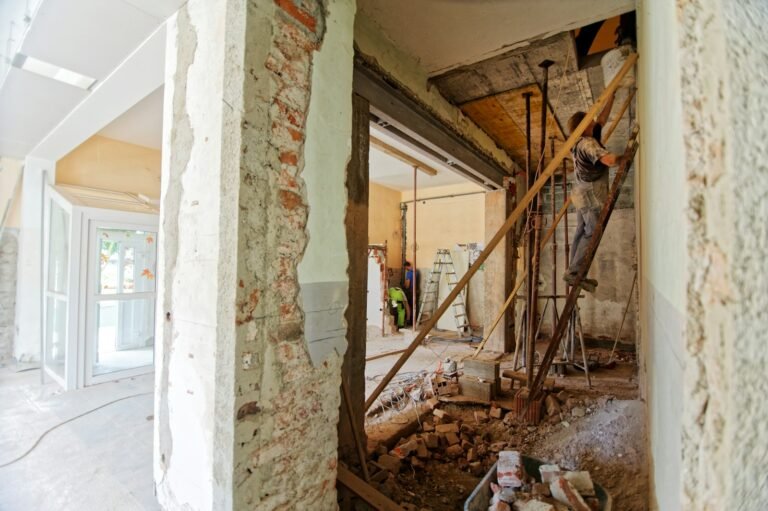
Three checks filter out most bad home renovation contractors in NYC before a single wall comes down. First, verify an active Home Improvement Contractor license with the Department of Consumer and Worker Protection (DCWP). Second, request a certificate of insurance and confirm your building will accept it. Third, refuse to pay more than a third of the contract price upfront, and tie every later payment to a finished milestone. A contractor who fails any one of these does not deserve a fourth phone call.
New York City regulates this trade more tightly than almost any other market in the country. Home improvement work above $200 requires a DCWP license. Permits for plumbing, electrical, and structural work go only to general contractors registered with the Department of Buildings. Co-op and condo boards reject insurance certificates over a single wrong word in the entity name. The rules exist because the failure cases are real. This guide walks through each gate in order. For the full project picture, start with our apartment renovation guide for NYC.
Key takeaways
- Any contractor doing home improvement work above $200 in NYC needs an active DCWP Home Improvement Contractor license. Verification takes two minutes and costs nothing.
- If your project needs a Department of Buildings permit, only a DOB-registered general contractor can pull it. A contractor who asks you to pull the permit yourself is shifting liability onto you.
- Co-ops and condos require a certificate of insurance naming the building as additional insured, with general liability limits that run from $1 million to $5 million.
- Get three itemized bids. A bid 30 to 50 percent below the others is a warning, not a bargain.
- Cap the deposit at a third of the contract price or less, and collect a lien waiver with every payment.
- If a licensed contractor takes your money and walks, the DCWP Trust Fund can repay up to $10,000 per contract. Unlicensed contractors leave you with no fund and a much harder court fight.
The license, and how to verify it
The Department of Consumer and Worker Protection licenses every home improvement contractor in the five boroughs. The threshold is low by design: any construction, repair, or remodeling work on a residence costing more than $200 requires the license. To get one, a contractor passes a written exam, carries insurance, and either posts a $20,000 surety bond or enrolls in the DCWP Trust Fund. The license number must appear on the contractor’s advertising and on your contract. No number on the paperwork is itself a violation.
Verification is free. Go to the DCWP license search at nyc.gov/dcwp, enter the business name or license number, and read the status. You want Active, with an expiration date comfortably past your project end. Inactive or Suspended ends the conversation. Check the licensed business name against the name on the bid; a contractor quoting under one LLC while licensed under another is a mismatch worth questioning.
The DCWP license is separate from Department of Buildings registration. If your renovation touches plumbing, electrical, or structural work, it needs a DOB permit, usually an Alt-2 for apartment jobs, and the DOB issues permits only to registered general contractors. Ask which entity will pull the permit. A contractor who suggests skipping permits, or filing the work as a cosmetic job it plainly is not, is asking you to carry the risk of stop-work orders and fines on your own property.
Insurance, and the COI your building will demand
Before any contractor sets foot in a co-op or condo, the managing agent will require a certificate of insurance, or COI. Brick Underground’s reporting on the subject is blunt: no COI, no access. The certificate documents three coverages. General liability, typically $1 million to $2 million, and as high as $5 million with umbrella coverage in some Manhattan buildings. Workers’ compensation for every person on the crew. And the building itself, plus the managing agent and often the board, named as additional insured under the exact legal entity name the building uses.
That last detail kills more renovation start dates than any other. A COI listing “300 West End Avenue” when the building’s legal entity is “300 WEA Owners Corp.” gets rejected without review. Request your building’s COI requirements from the managing agent before contractors bid, hand the sheet to each finalist, and ask how fast their broker can produce a compliant certificate. A licensed, insured contractor turns this around in a day or two. Hesitation here usually means the coverage does not exist at the required limits.
Three bids, and what a real bid includes
Get three written bids from licensed contractors, and make sure each one prices the same scope. A real bid itemizes demolition and debris removal, materials by brand and model number, labor by trade, permit and filing fees, and allowances for anything not yet selected. It states a start date, a duration, and a payment schedule. One page with a single number at the bottom is not a bid. It is an opening position you will renegotiate for months.
Benchmark the numbers before you compare them. Our breakdowns of kitchen renovation costs in NYC and bathroom renovation costs in NYC give you the current per-project ranges. With those in hand, the outlier bids identify themselves. A number 30 to 50 percent below the field means the contractor missed something, plans to make it up in change orders, or intends to cut corners you will pay to fix later.
The contract: payment schedule, change orders, lien waivers
The deposit question has a short answer. Renovation platform Sweeten, which matches homeowners with general contractors in New York, treats roughly a third of the contract price as the upper end of normal for a deposit, with smaller percentages on larger budgets. Homeowner-side guidance from Realm pushes lower still, recommending 10 percent down with every later payment tied to a verifiable milestone. The principle behind both numbers is leverage: money paid for work not yet done is money you cannot get back by withholding it.
| Milestone | Payment |
|---|---|
| Contract signing | 10 to 15 percent |
| Demolition and rough-in complete | 25 percent |
| Rough inspections passed, finishes underway | 25 percent |
| Substantial completion | 25 to 30 percent |
| Punch list complete, final lien waiver delivered | 10 percent |
Three more clauses belong in writing. Change orders: no scope change proceeds without a signed, priced change order. Verbal agreements about “while we’re in there” work are where budgets die. Lien waivers: collect a partial lien waiver from the contractor with every progress payment, and a final waiver from the contractor and subcontractors before the last check. Subcontractors who go unpaid by your general contractor can file a mechanics lien against your apartment even though you paid in full. The waiver is your receipt against that claim. Timeline: a stated start date, a stated duration, and, on larger jobs, per-day damages for delays the contractor controls.
Red flags, ranked
- No DCWP license number on the contract, the card, or the truck. Disqualifying, full stop.
- Cash only, or a deposit above a third. Both remove your leverage and your paper trail at the same time.
- Permit avoidance. “We don’t need to file for this” on a job that moves plumbing or wiring, or a request that you pull an owner’s permit yourself.
- No written contract, or a vague one. “Renovate kitchen as discussed” guarantees a dispute about what was discussed.
- The lowball bid. Dramatically under the field means change orders are coming.
- Slow or evasive on the COI. Compliant insurance takes a broker a day, not three weeks.
- No checkable references or fixed business address. You want two past clients you can call and one project you can see.
What to do when things go wrong
Document first: dated photos, the contract, every payment record, every text. Send the contractor a written notice describing the problem and a deadline to cure it. If that fails, file a complaint with DCWP online; the agency forwards it to the contractor and can assign a mediator to push for a settlement. For licensed contractors who took payment and failed to perform, the Home Improvement Contractor Trust Fund can repay homeowners up to $10,000 per contract. Since 2023 a limited claims process covers consumers who completed DCWP mediation without a settlement, alongside the original route that requires a court judgment or arbitration award. The fund only covers licensed contractors, which is the strongest practical argument for the license check you ran at the start.
More planning resources live in our renovation guides archive.
Frequently asked questions
Does a small job really require a licensed contractor in NYC?
Yes. The DCWP license requirement applies to home improvement work costing more than $200, which covers essentially every real job. The threshold is deliberately low so that the licensing system, and the Trust Fund behind it, covers ordinary homeowners, not just gut renovations.
How much should I pay a renovation contractor upfront?
Treat a third of the contract price as the absolute ceiling, per Sweeten’s New York guidance, and aim lower on big budgets. Realm’s homeowner guidance recommends 10 percent down. Every payment after the deposit should unlock only when a named, inspectable milestone is finished.
What happens if I hire an unlicensed contractor and the job fails?
You lose access to the DCWP Trust Fund, which only covers licensed contractors, and you are left with court as your main remedy against a business that may have no assets and no fixed address. The city can fine the contractor for unlicensed activity, but the fine does not refund your money. The two-minute license lookup is the cheapest insurance in the entire project.
Sources
- NYC Department of Consumer and Worker Protection: Home Improvement Contractor License Application Checklist
- NYC DCWP: Check License Status
- NYC Department of Buildings: General Contractor Registration
- Brick Underground: What’s a certificate of insurance, and when is it necessary?
- Sweeten: My contractor asked for a 33% deposit. Is this normal?
- NYC DCWP: Home Improvement Contractor Trust Fund